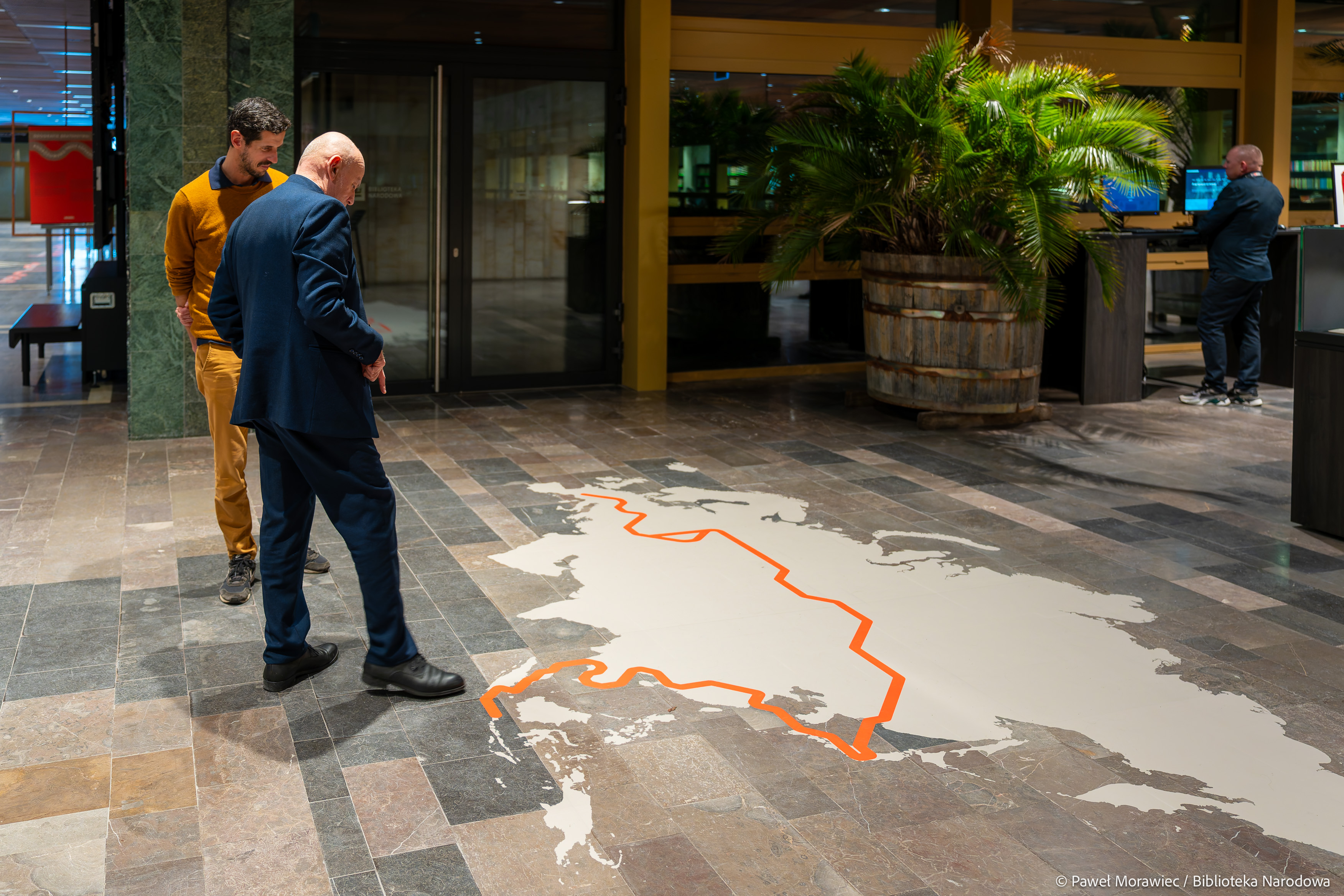
Opening of the exhibition VOJAĜO. Cycling to Asia with Esperanto (1928–1932)
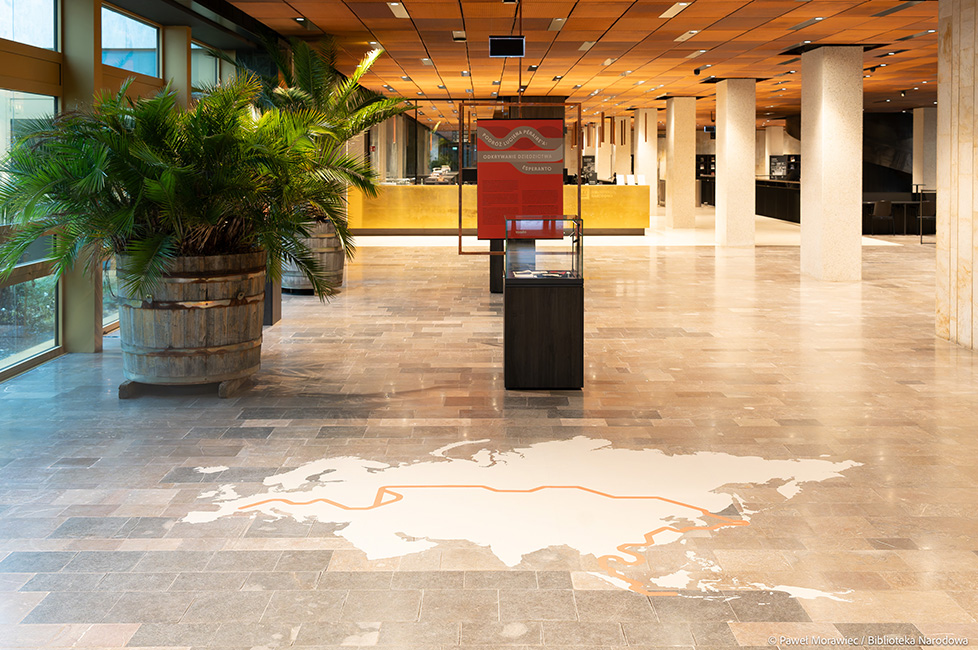
A bicycle journey across two continents, thousands of documents rediscovered after decades, and the story of Esperanto that began in Warsaw. The exhibition VOJAĜO. Cycling to Asia with Esperanto (1928–1932), dedicated to the extraordinary voyage undertaken by the young Esperantist Lucien Péraire, was officially opened in the reading rooms of the National Library of Poland.
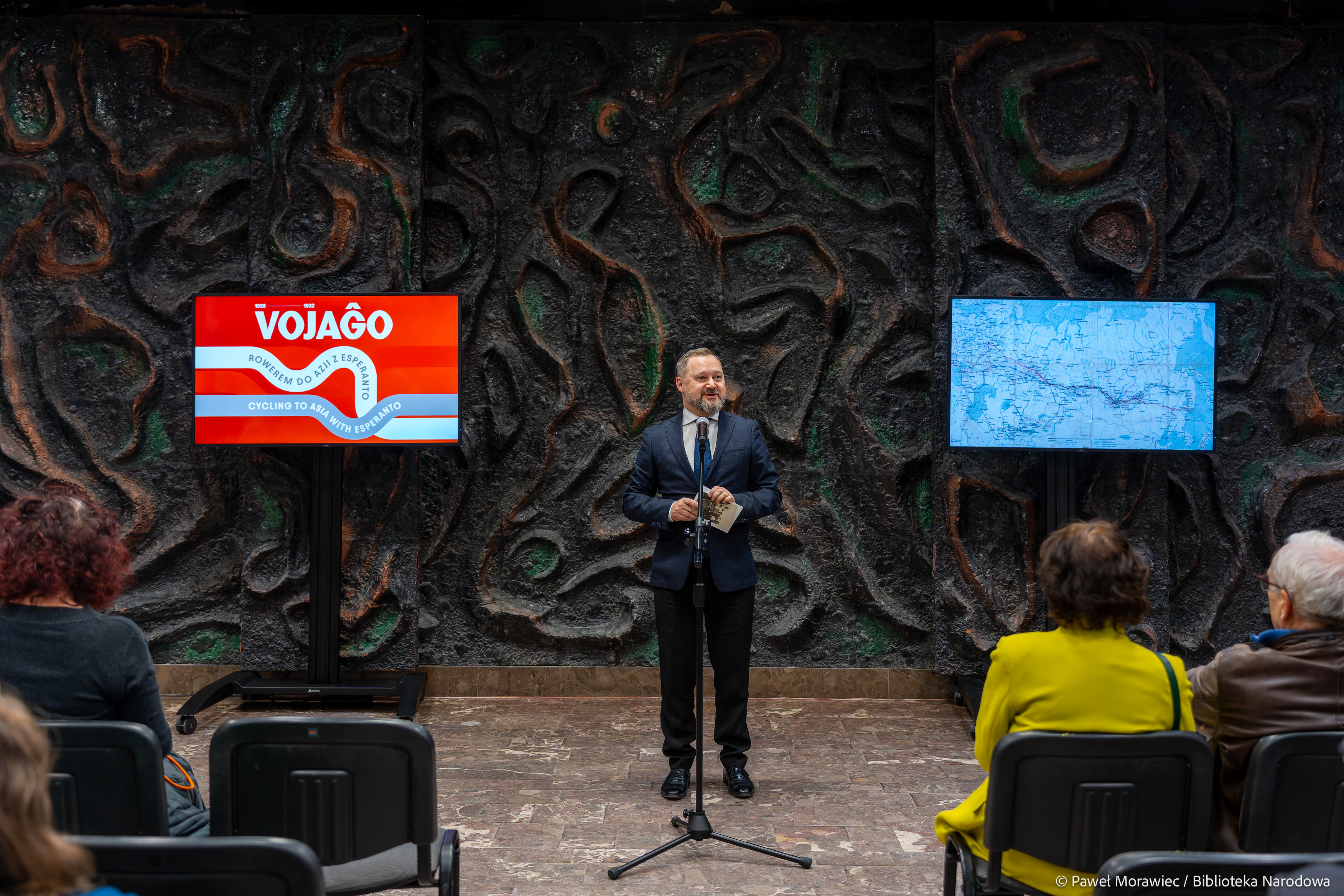
The gathered guests were welcomed by the Director of the National Library of Poland, Dr Tomasz Makowski. He recalled that thanks to an agreement between the National Library of Poland and the Universal Esperanto Association (Universala Esperanto-Asocio), nearly seven and a half tonnes of unique materials from the UEA’s library and archives were transferred from Rotterdam to Warsaw. He emphasized the importance of this event, noting its significance both for the National Library and for the protection of world cultural heritage. He also pointed out that locating the collection in Warsaw carries particular symbolic meaning, as the heritage of Esperanto is an important element of Poland’s cultural heritage as well. In conclusion, he symbolically referred to the National Library of Poland as a Centre of Esperanto Studies.
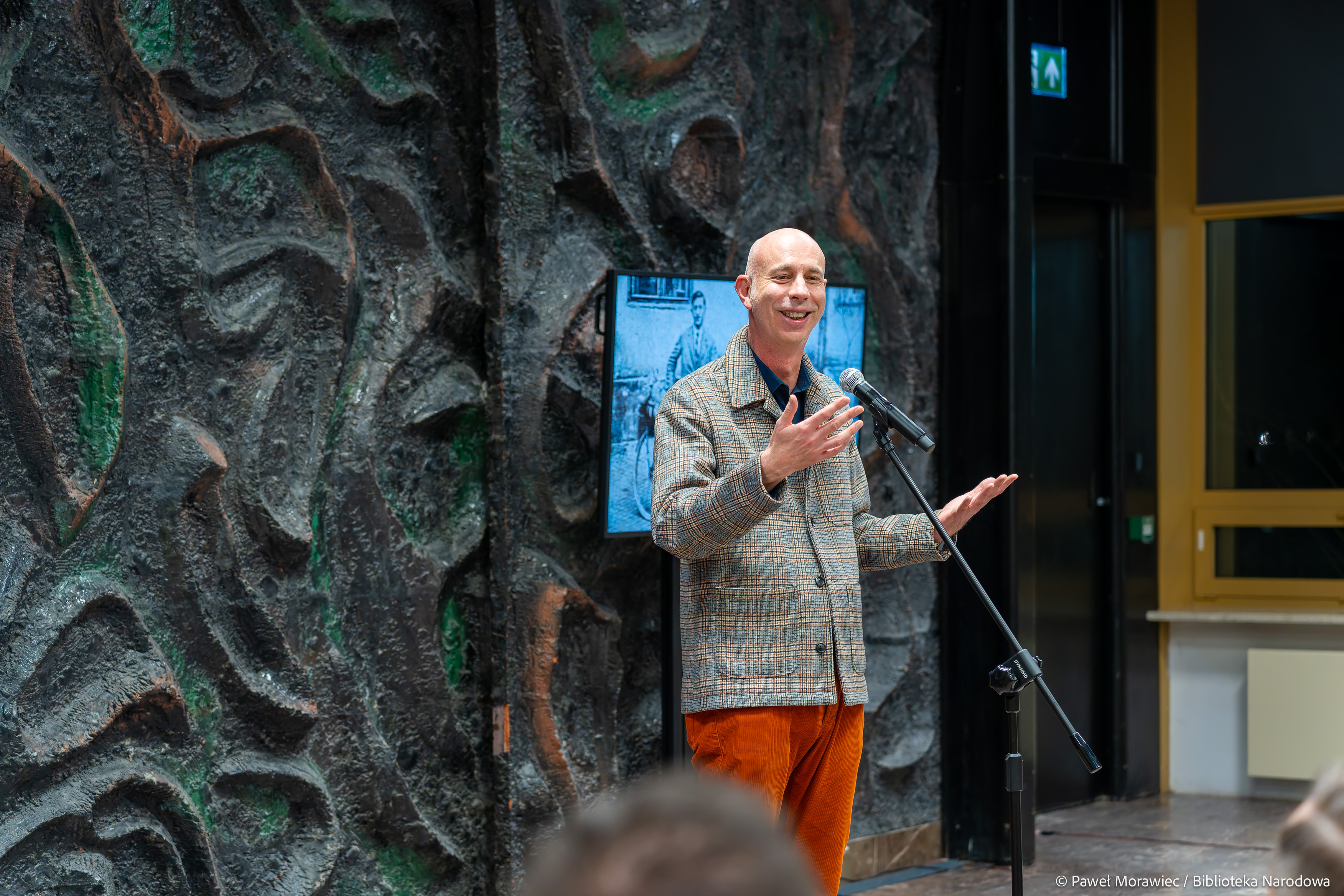
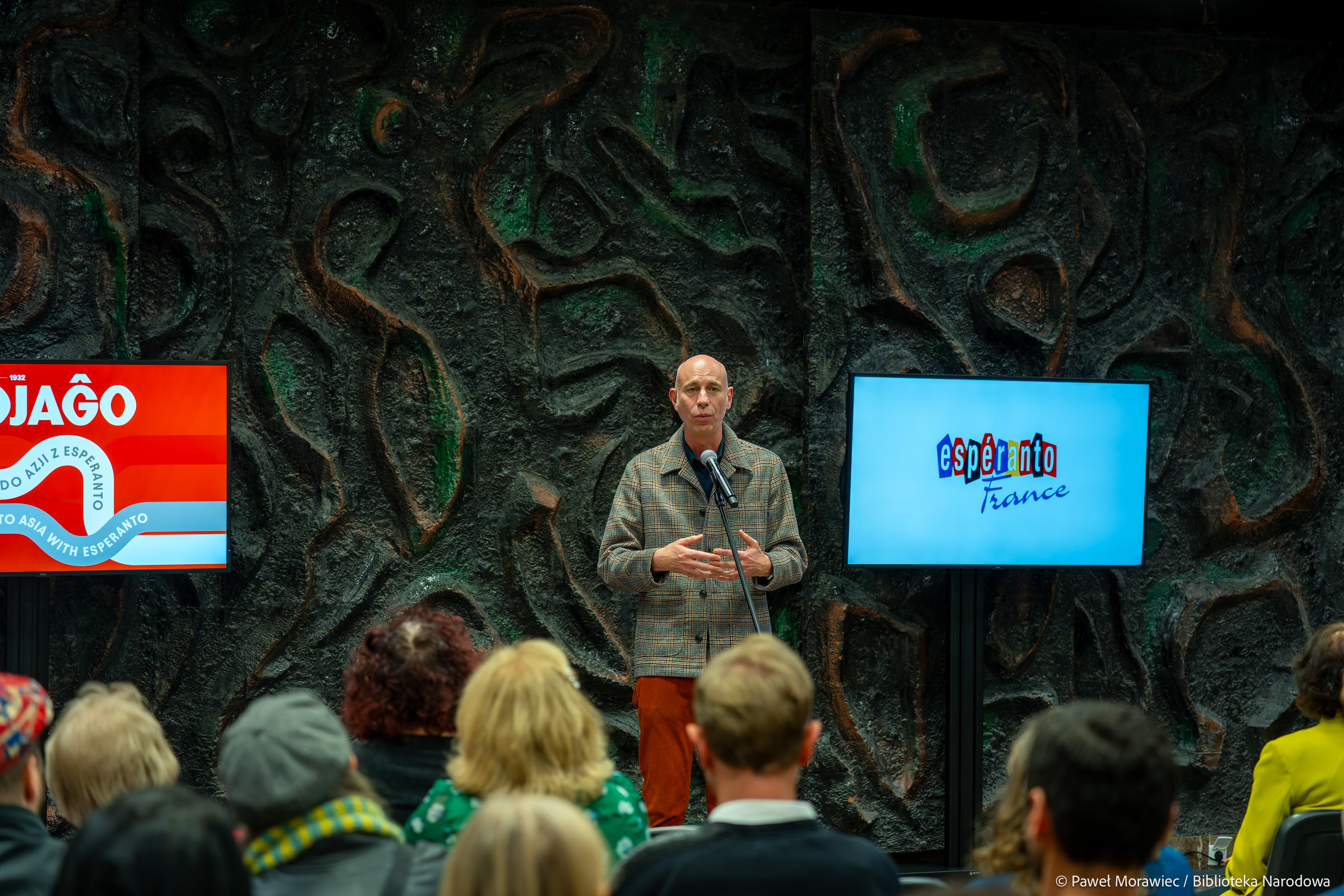
The floor was then taken by the exhibition’s curator, Pascal Dubourg Glatigny. He drew attention to the specific nature of the Esperanto heritage – a supranational heritage that is therefore especially vulnerable to dispersion and disappearance. The exhibition VOJAĜO presents two key approaches to its preservation: large-scale digitization and the professional safeguarding of the collections, made possible by their transfer from Rotterdam to Warsaw.
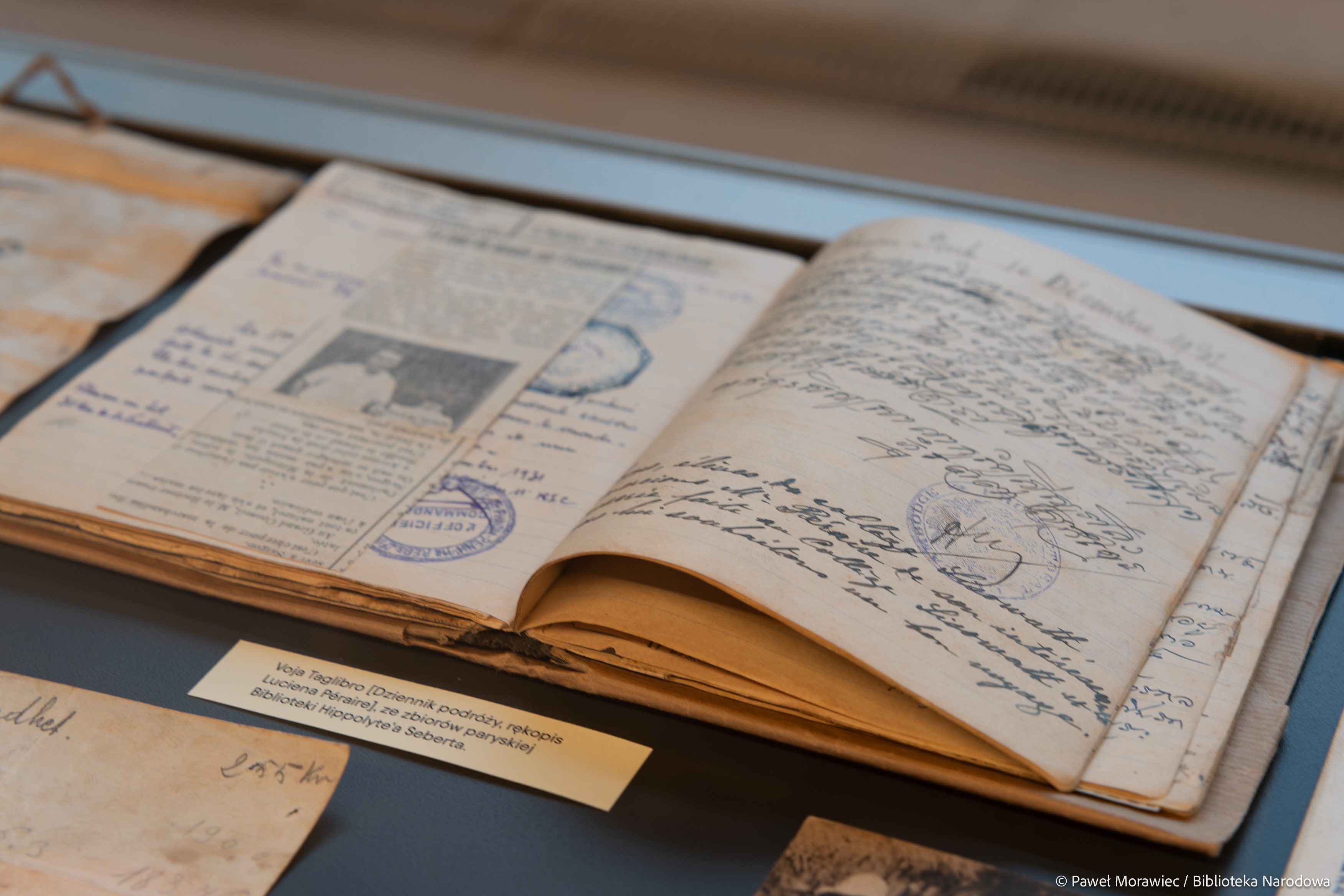
As the curator noted, the protagonist of the exhibition and his journey demonstrate that Esperanto – which was around fifty years old at the time – functioned as a real means of communication, rather than merely an idea or a project. The uniqueness of this journey also lies in the fact that although tens of thousands of Esperanto journeys were undertaken, few have been preserved in such a rich documentary form as the expedition of Lucien Péraire. The objects presented in the exhibition constitute an exceptional collection in this respect; however, only a small part of the more than 8,000 items is on display, while the entire collection is available online at website peraire.huma-num.fr, also in a Polish-language version.
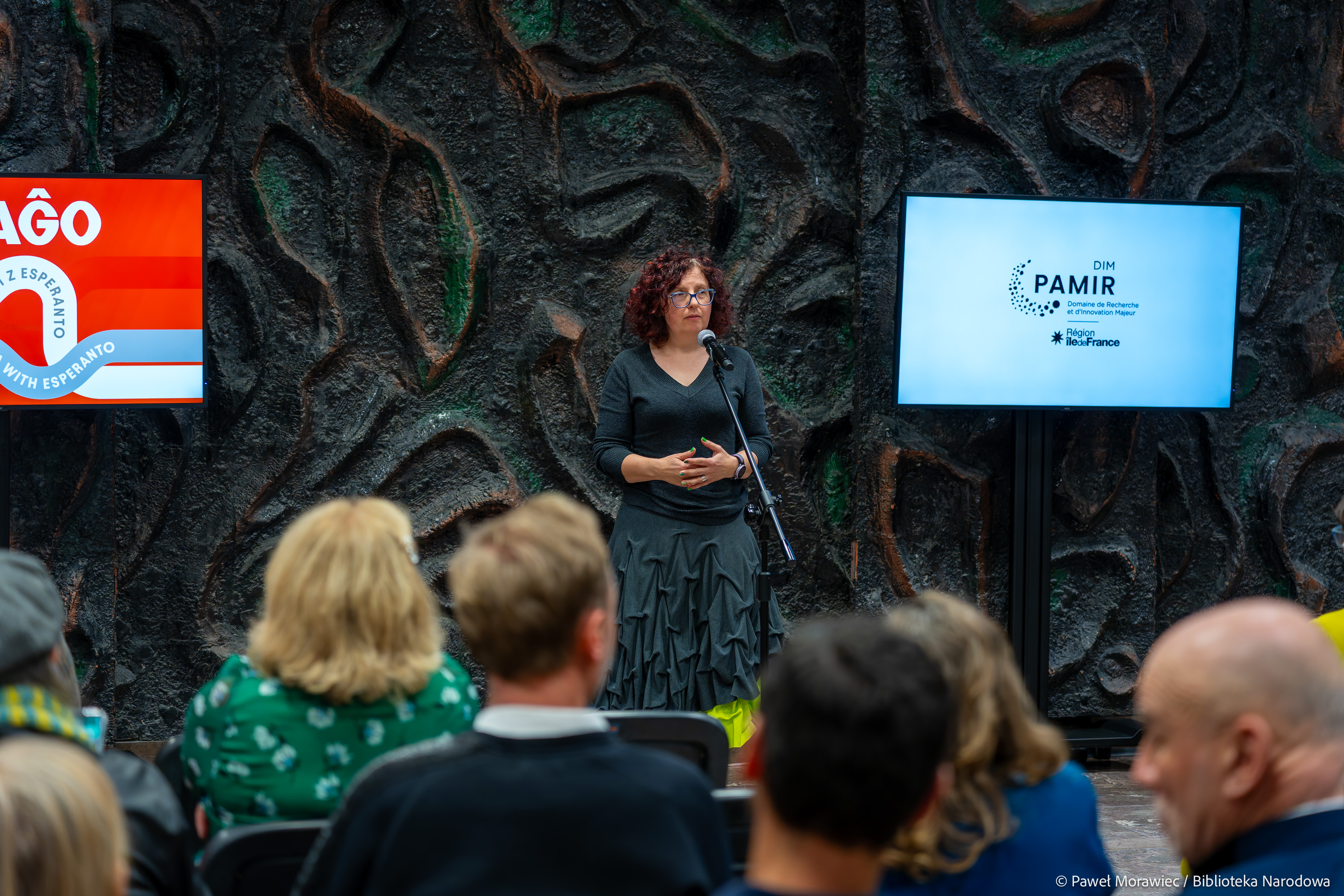
Gabriela Skonieczna, co-curator of the exhibition and a collaborator of the National Library of Poland, spoke about the individual sections into which the exhibition is divided. She invited visitors to explore not only the story of Lucien’s journey, but also the histories of activists, writers, and translators – both well known and largely forgotten. Today, the Lucien Péraire collection and the Hector Hodler collection, this one being now part of the holdings of the National Library of Poland, serve as a kind of time machine, allowing visitors to travel through time and space across countries, some of which no longer exist. She encouraged the audience to embark on this journey: to see the world up close, together with Lucien, but also from the perspective of the entire Esperanto movement.
The loan of the objects from the Péraire collection for the exhibition in Warsaw was made possible thanks to the kind cooperation of Esperanto-France, the scientific support of the CNRS, and the funding provided by the Île-de-France Region (DIM-Pamir). Zdravka Boytcheva, UEA Board Member for Culture, and Victor Simmonet of Esperanto-France were among those attending the opening ceremony.
The exhibition VOJAĜO. Cycling to Asia with Esperanto (1928–1932) will be on view until the end of March. Admission is free.
VOJAĜO. Cycling to Asia with Esperanto (1928–1932)
9 December 2025 – 31 March 2026
National Library of Poland
al. Niepodległości 213, Warsaw
Curators: Pascal Dubourg Glatigny, Gabriela Skonieczna
Research collaboration: Sophie David, Régis Fournier, Agnieszka Mozer, Nicolas Raymond
Graphic design: Goodnews | Waldemar Koralewski, Paulina Wojdyna, Justyna Radziej