Further Donations from the Romer Family Archive to the National Library
The Romer family archive has been gradually donated to the National Library of Poland for more than a decade. It now comprises materials dating from the 17th to the 20th century, including documents relating to families connected by marriage, among them the Jundziłł family, who were particularly closely related to the Romers.
Over the years, the National Library’s collections have been enriched with genealogical materials, including a history of the Romer family written by Eugeniusz Romer, legal and property records concerning the family estates in Livonia and Lithuania, as well as personal and financial documents. A substantial part of the archive also consists of memoirs, diaries, journals and letters written by individual family members, mainly in the 19th and 20th centuries. Among the more unusual items are collections of culinary and medicinal recipes and prayers. Particularly noteworthy is a multi-volume collection documenting the activities of the post-war Polish National Treasury Commission in Canada, chaired by Tadeusz Romer, a diplomat who served as Polish Ambassador to Japan (1937–1941) and Minister of Foreign Affairs in Stanisław Mikołajczyk’s government (1943–1944), and who organised assistance for Polish Jews arriving in Japan and subsequently in Shanghai.
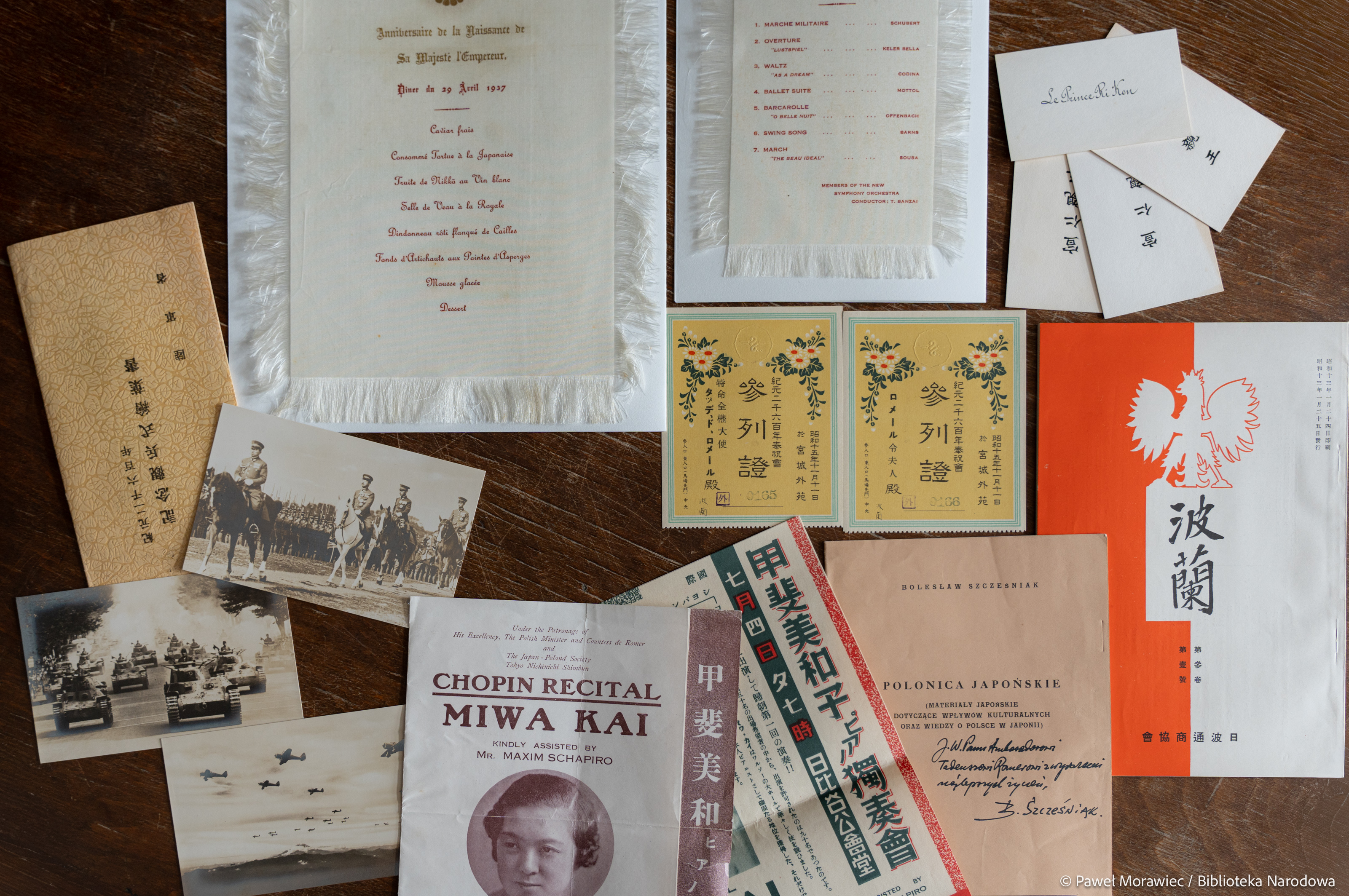
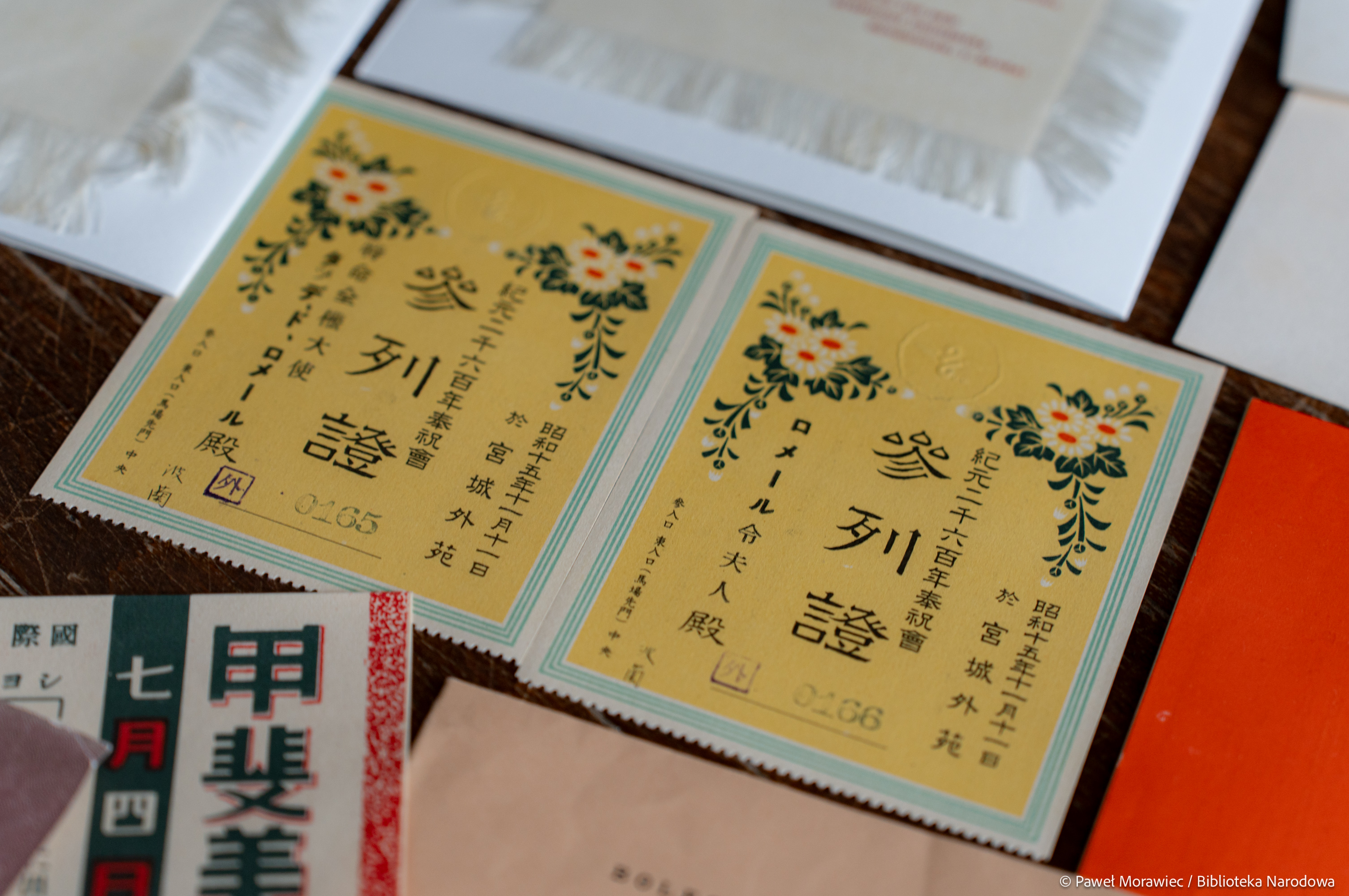
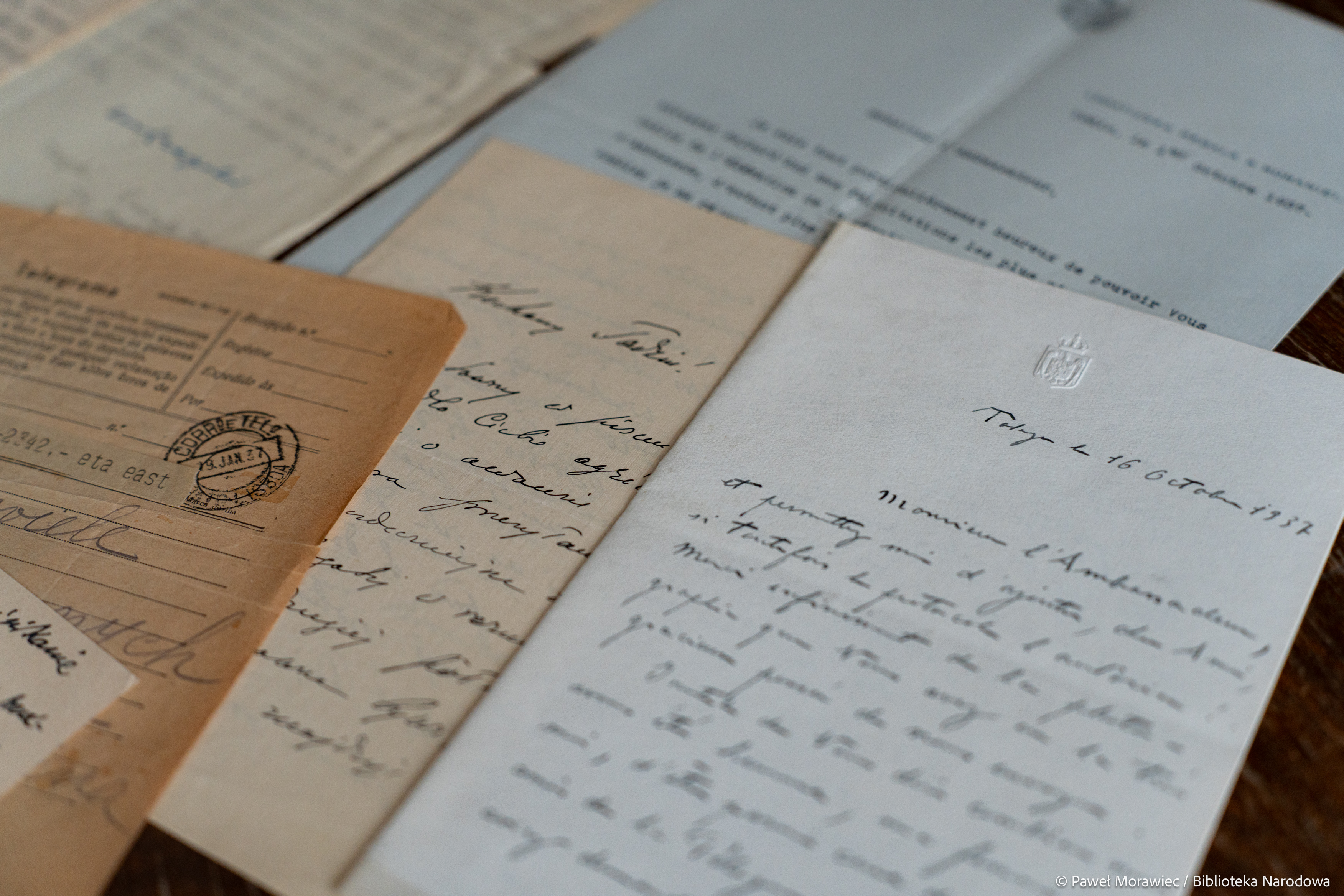
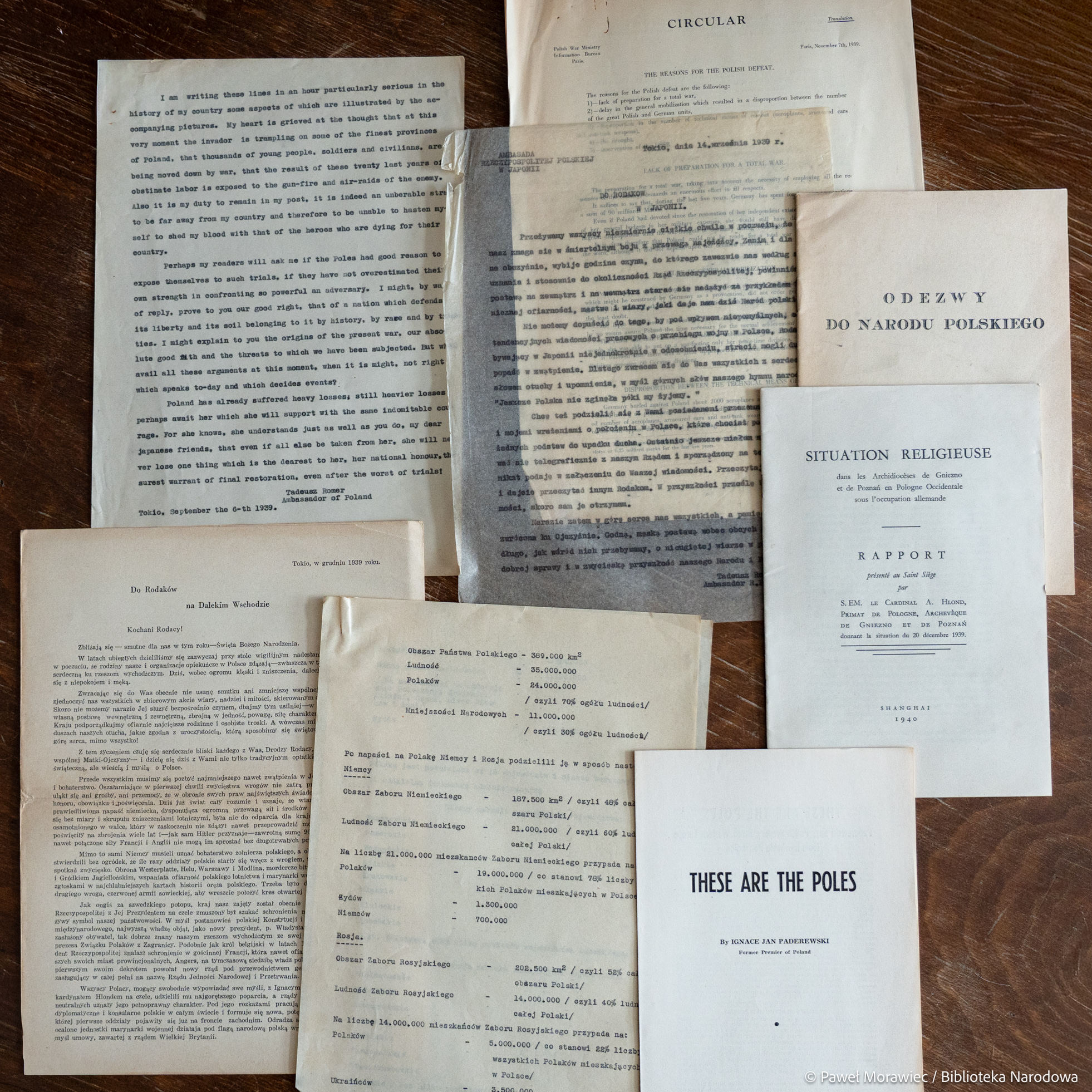
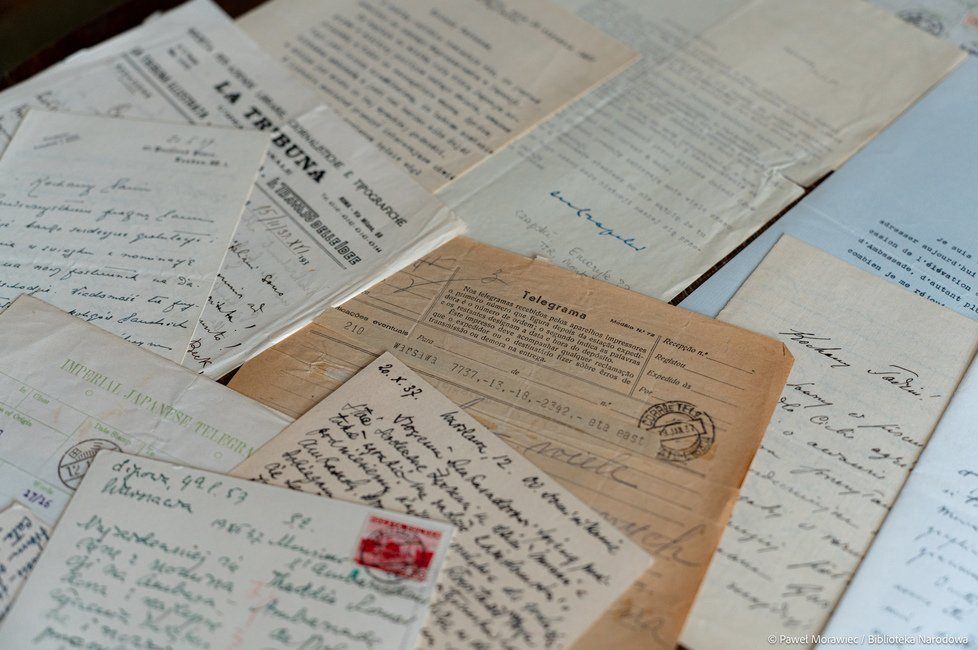
The Romer family archive at the National Library has recently been expanded with materials donated in August this year by Teresa Romer, daughter of Tadeusz and Zofia Romer. These include particularly interesting memorabilia from the period when her father served as Polish Ambassador in Tokyo: letters of congratulations from 1937 following his appointment as ambassador, texts of his official addresses and speeches, and documents illustrating cultural life and diplomatic relations. Special attention is given to the wartime period, with moving appeals addressed to Poles in Japan following the outbreak of war in 1939, lists of territorial losses and human casualties, letters from sympathetic correspondents deeply concerned about the wartime situation, and extracts from letters written by Poles deported to the interior of the Soviet Union.
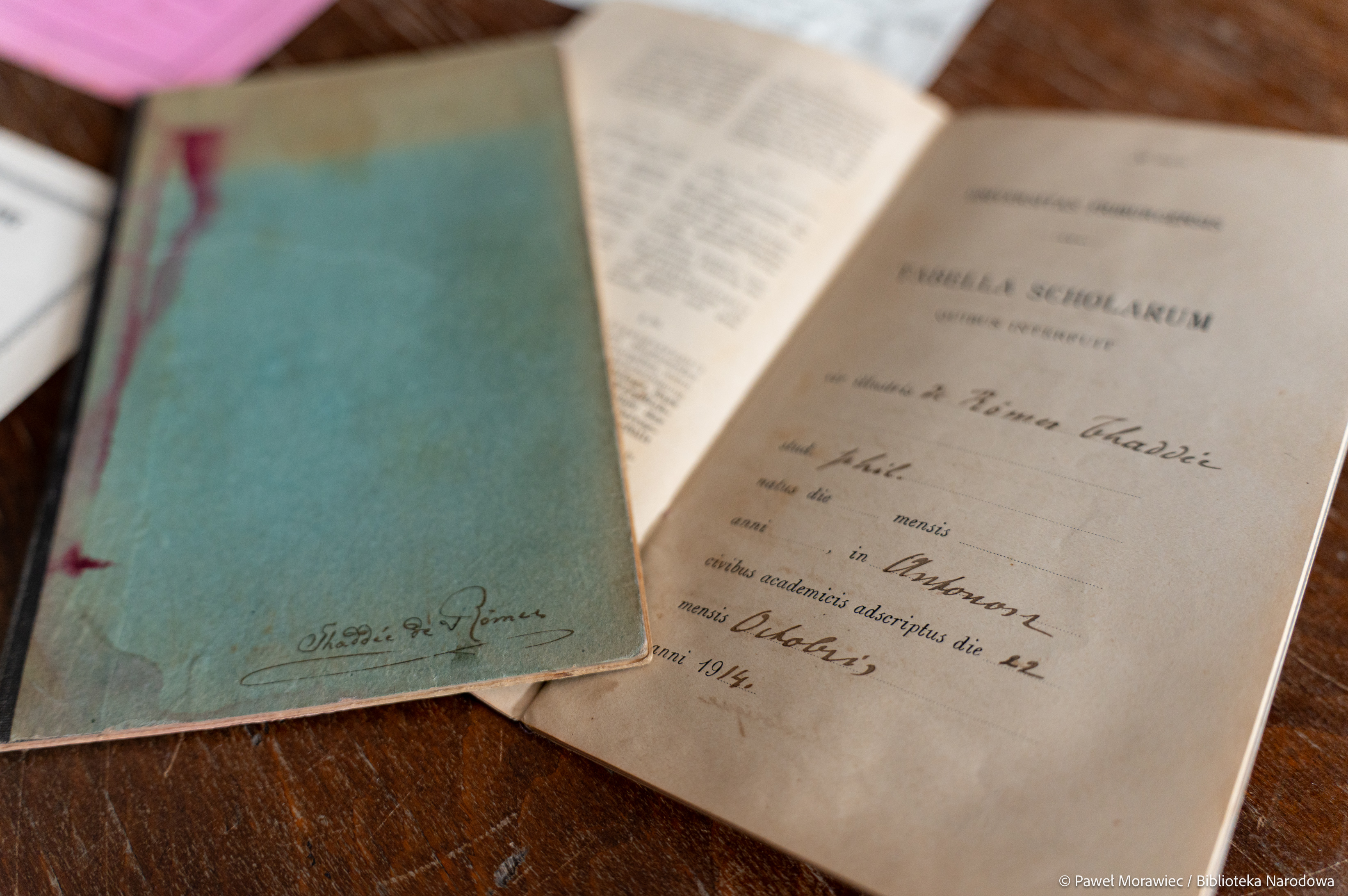
Another significant part of the donation is an extensive collection of family correspondence spanning the years 1912–1954. It includes letters from Bronisław Romer written during his military training in the Imperial Russian Army. He later joined the 1st Krechowce Uhlan Regiment but was captured by the Bolsheviks and executed in 1918. The collection also contains letters from Michał Pius Römer, an eminent legal scholar in interwar Lithuania and a staunch advocate of Lithuanian independence. Also of considerable interest is a group of documents and correspondence concerning the Romer family’s loss of its ancestral estates in Lithuania, including Antonosz, following the change of political power.
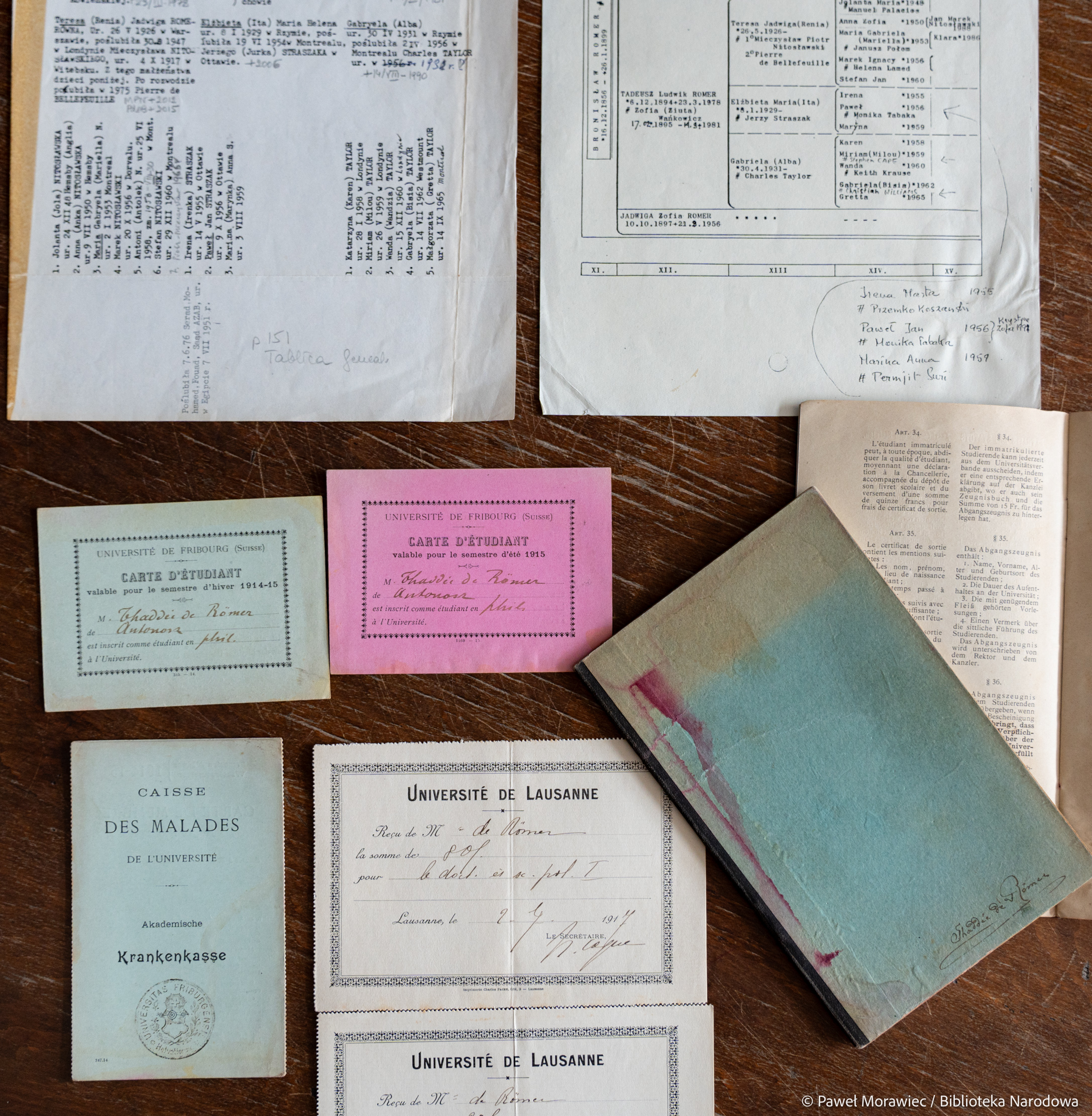
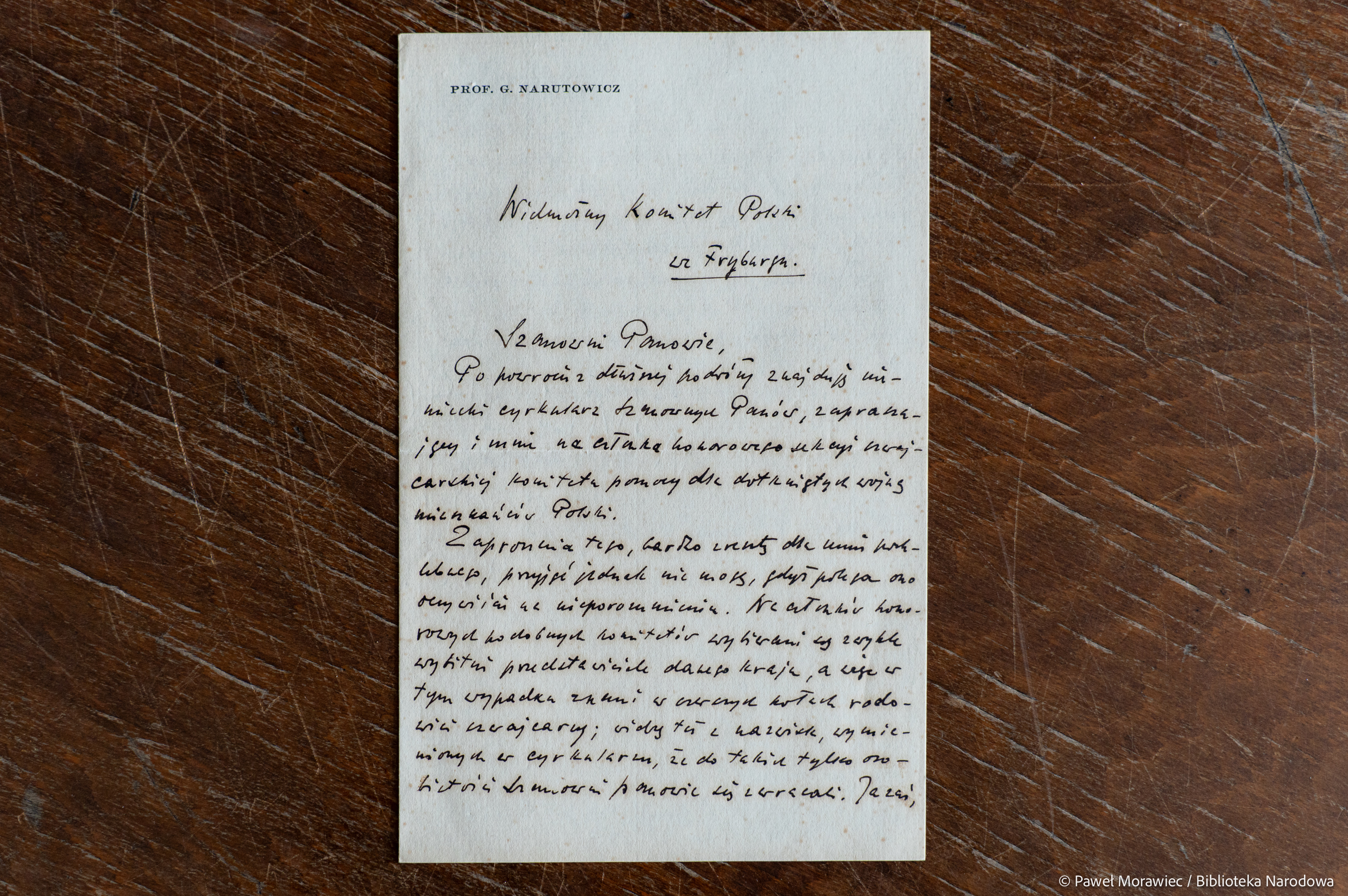
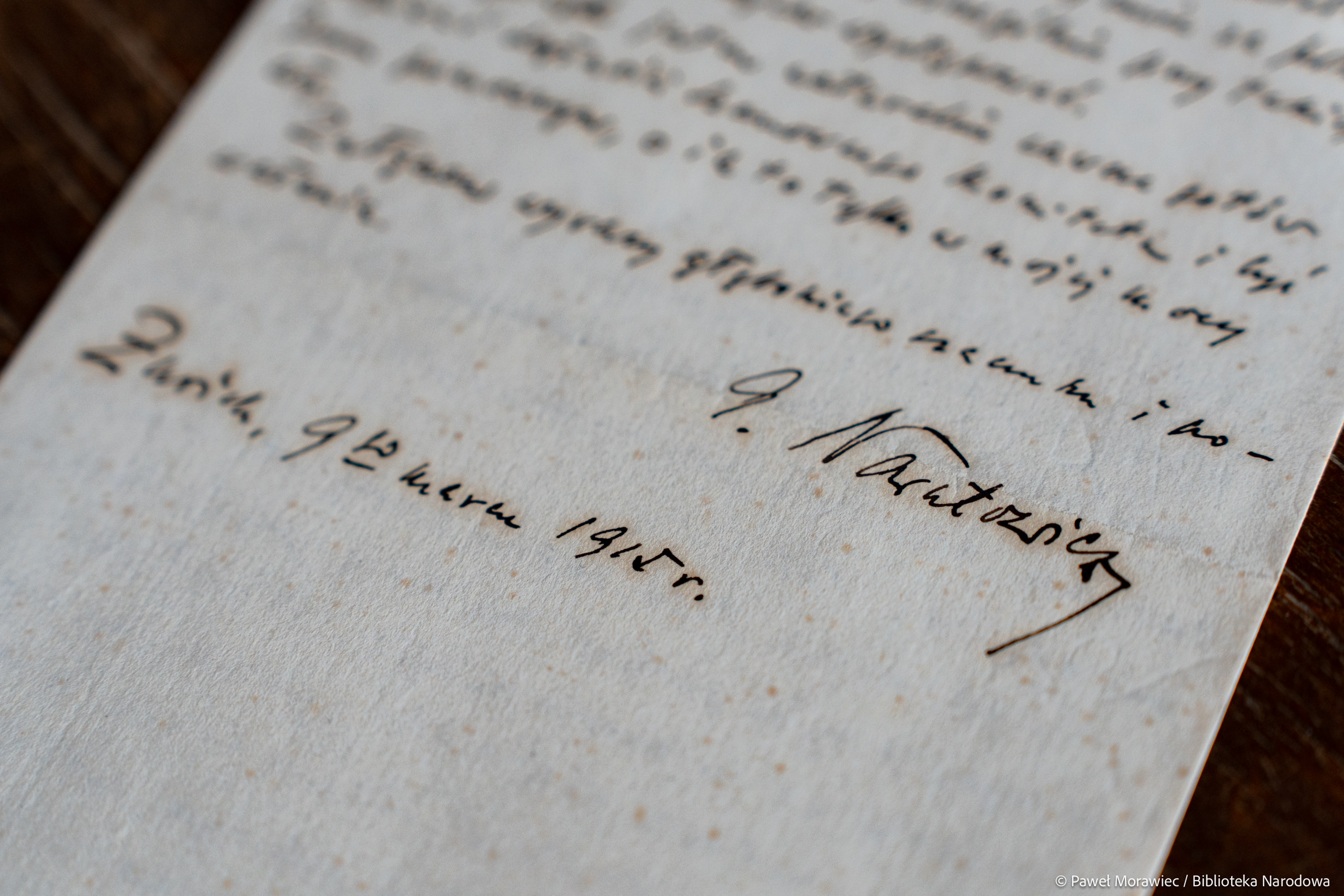
Among the other notable items donated to the National Library is the original manuscript of a letter written by Gabriel Narutowicz to the Swiss General Committee for Aid to the Victims of the War in Poland (Zurich, 1915). As a student at the University of Lausanne and later in Fribourg, Tadeusz Romer served as the Committee’s secretary, working alongside figures including Henryk Sienkiewicz and Ignacy Paderewski. Narutowicz declined membership of the Committee, regarding it as an initiative intended for native Swiss citizens, but expressed his willingness to assist as a Pole.
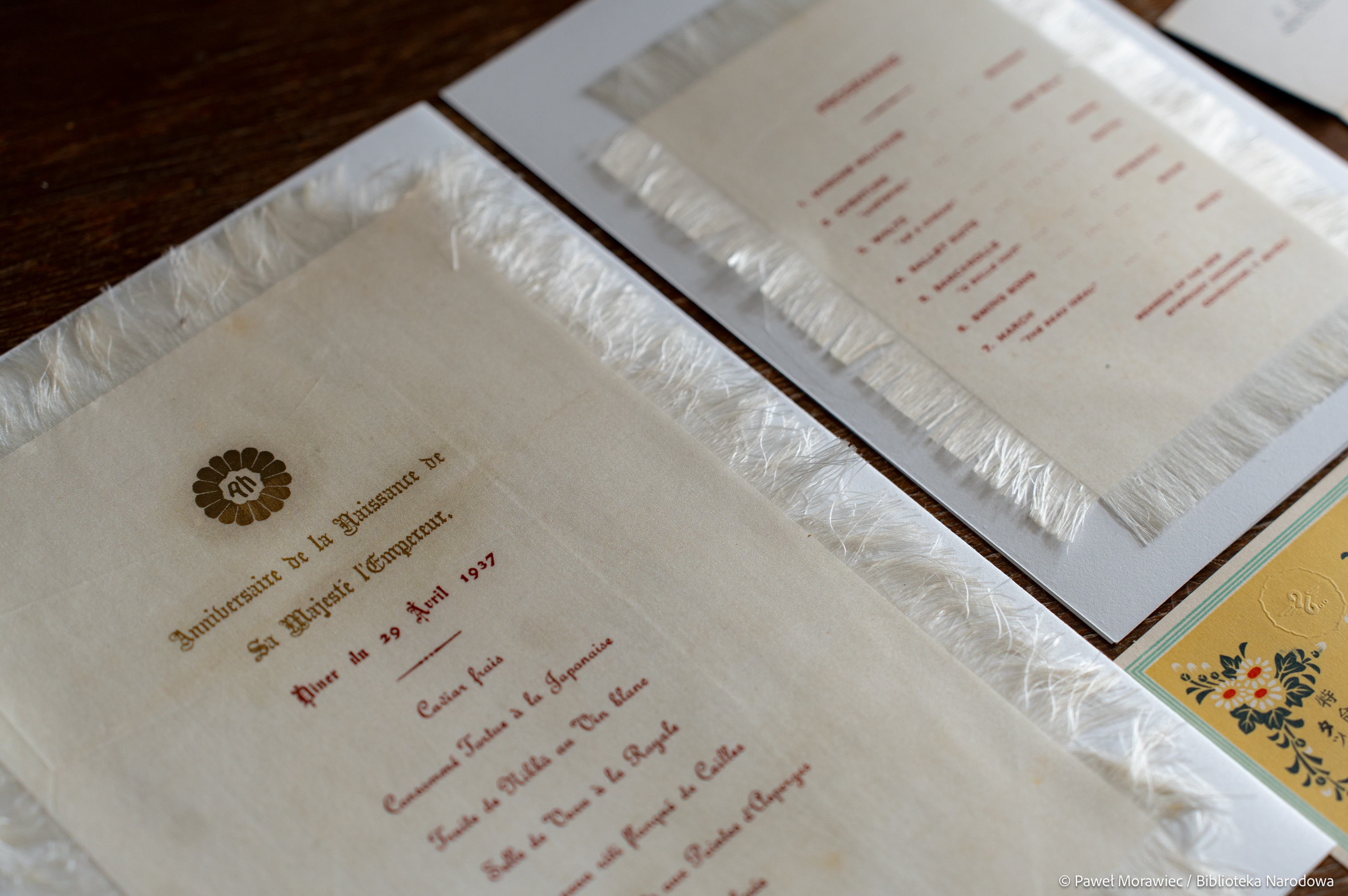
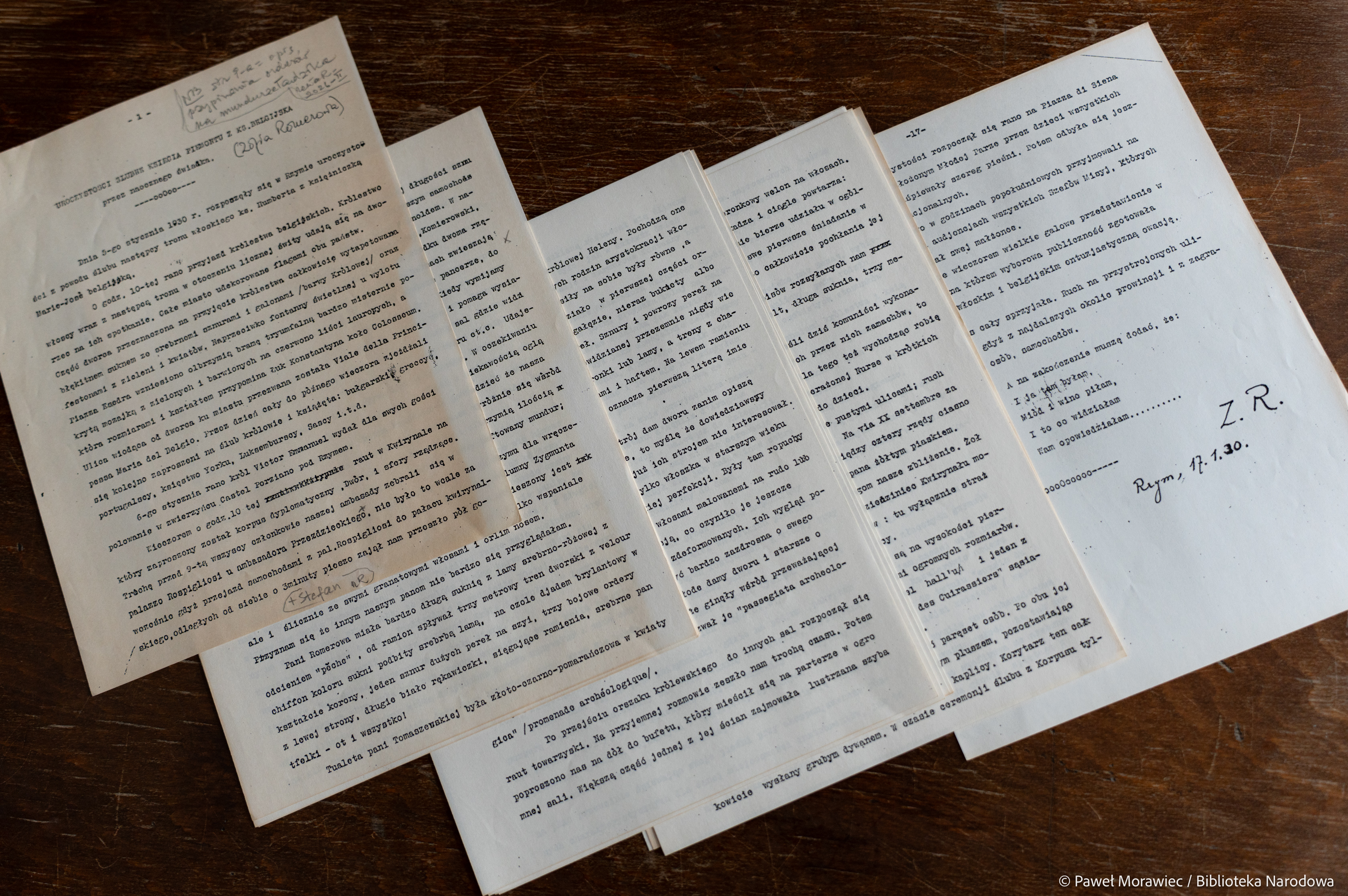
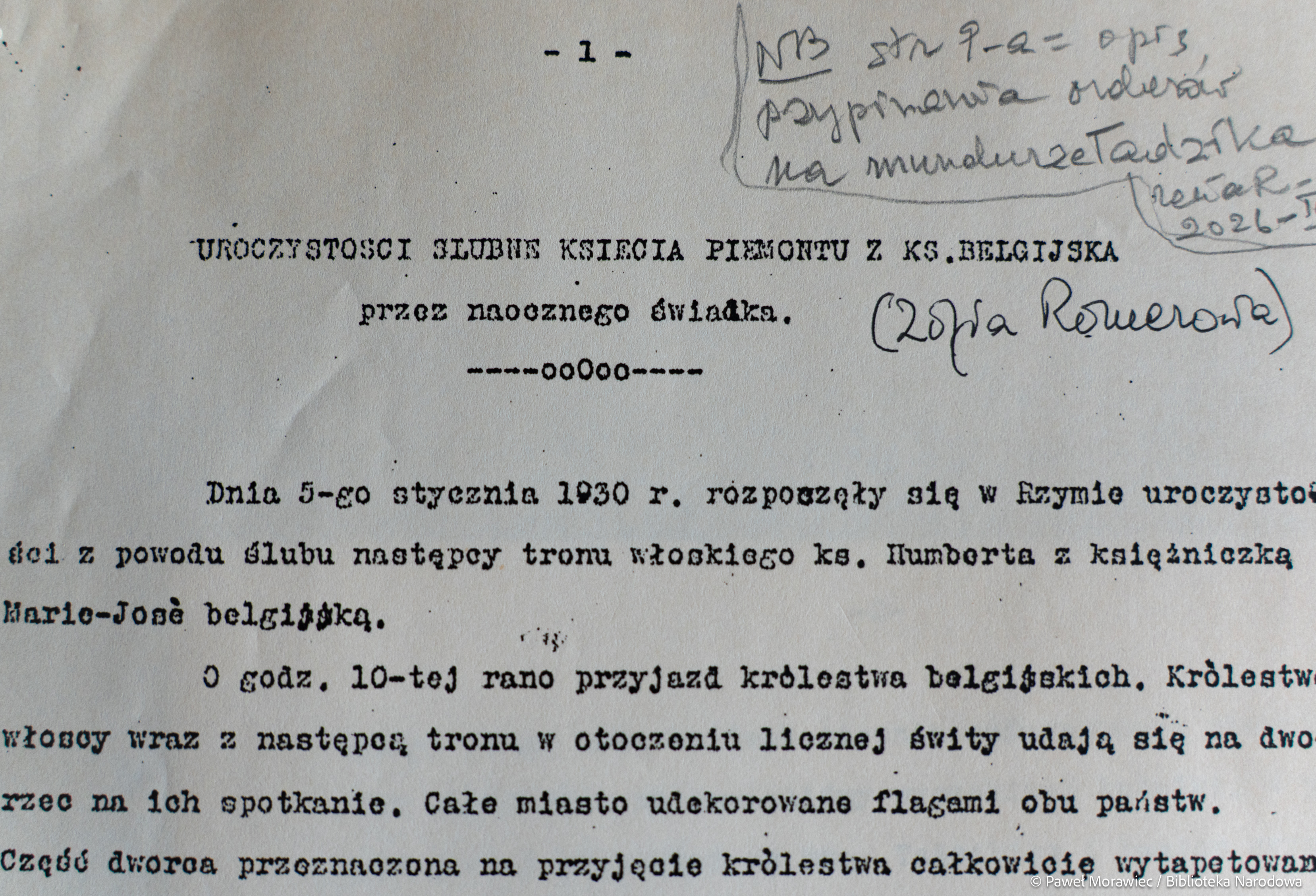
Another remarkable document is Zofia Romer’s account of the wedding celebrations of the Prince of Piedmont and the Belgian princess in Rome in 1930, featuring detailed and exceptionally vivid descriptions of the ceremony, decorations, and gowns worn by ladies of the court and members of the diplomatic corps. The collection also includes the original menu and concert programme from a birthday reception for the Japanese Crown Prince in 1937, as well as a programme for a Chopin concert.
Of particular literary interest is a Japanese translation of Melchior Wańkowicz’s Szpital w Cichiniczach (The Hospital in Cichinicze), published in 1938 with a foreword by Tadeusz Romer. The book has a little-known story behind it: Wańkowicz based his account very closely on the memoirs of his cousin, Zofia Romer, née Wańkowicz, without her knowledge or consent. During the First World War and the Bolshevik Revolution, Zofia Wańkowicz worked as a nurse in a field hospital, demonstrating extraordinary courage and dedication. The original text of her memoirs was published privately by the family many years later.
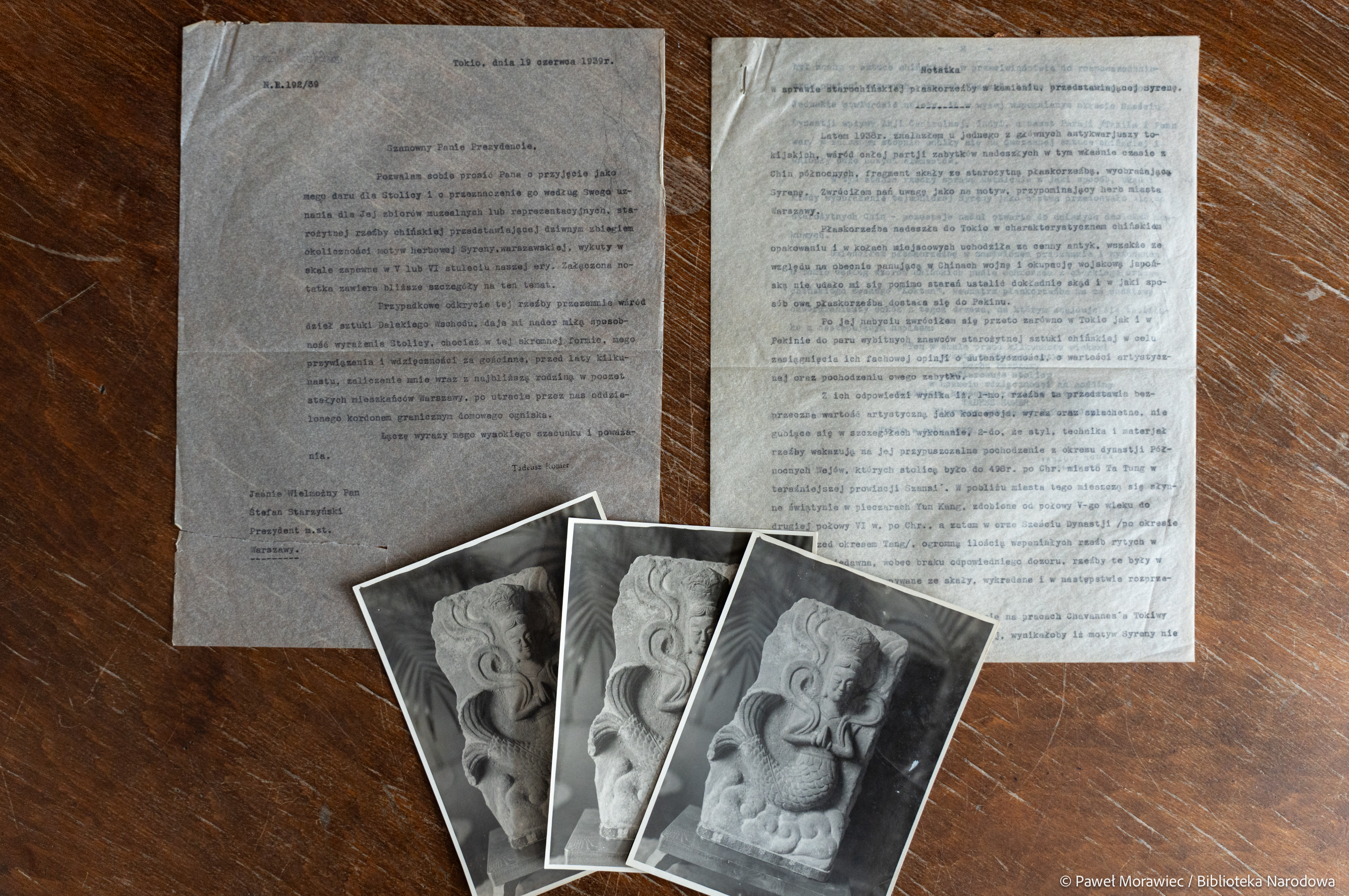
Another intriguing item is a copy of a letter from Tadeusz Romer to Stefan Starzyński, accompanied by a note concerning Romer’s donation to Warsaw of an ancient Chinese sculpture depicting a mermaid. Purchased in Tokyo, the sculpture was shipped to Warsaw in June 1939 but did not survive the war.
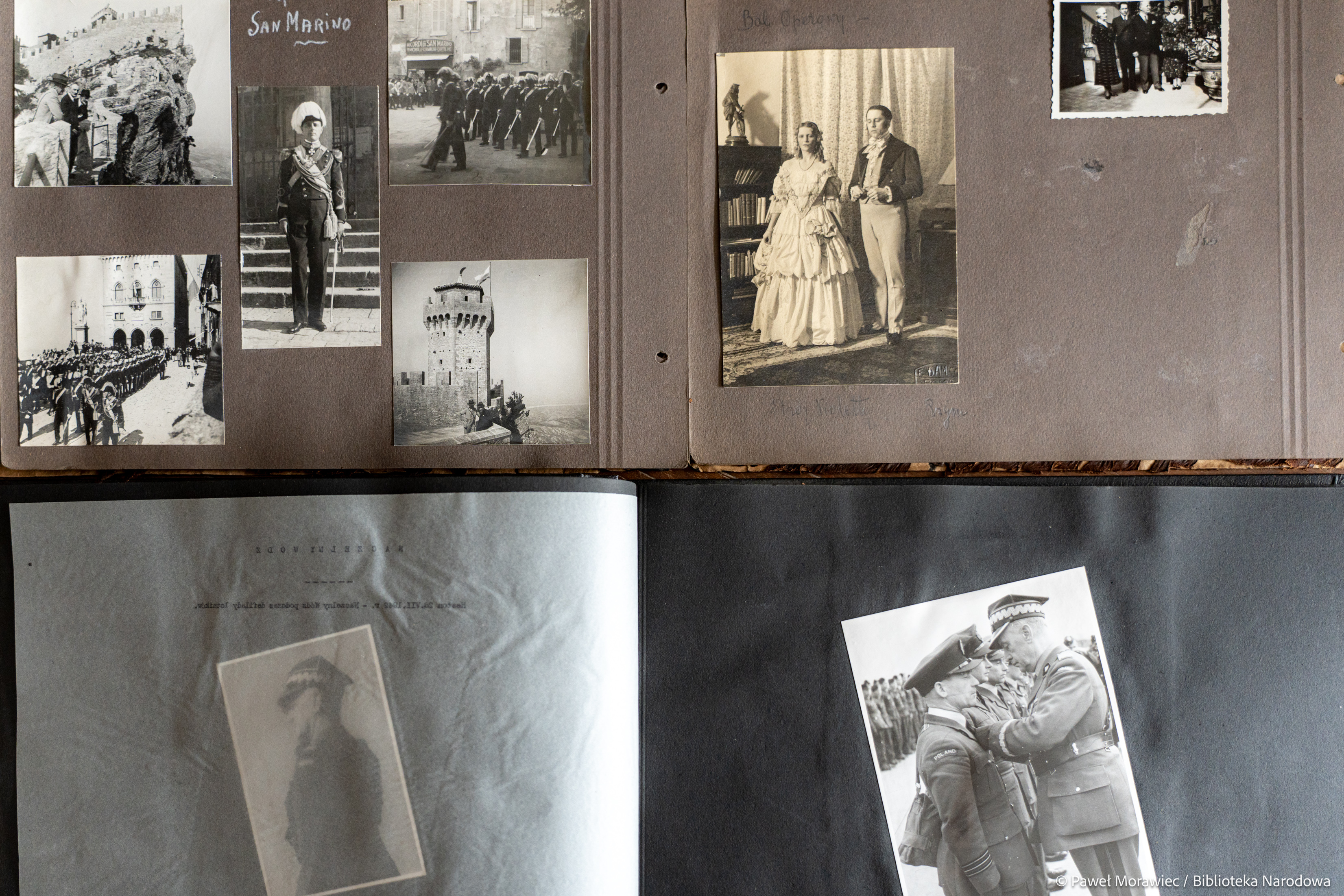
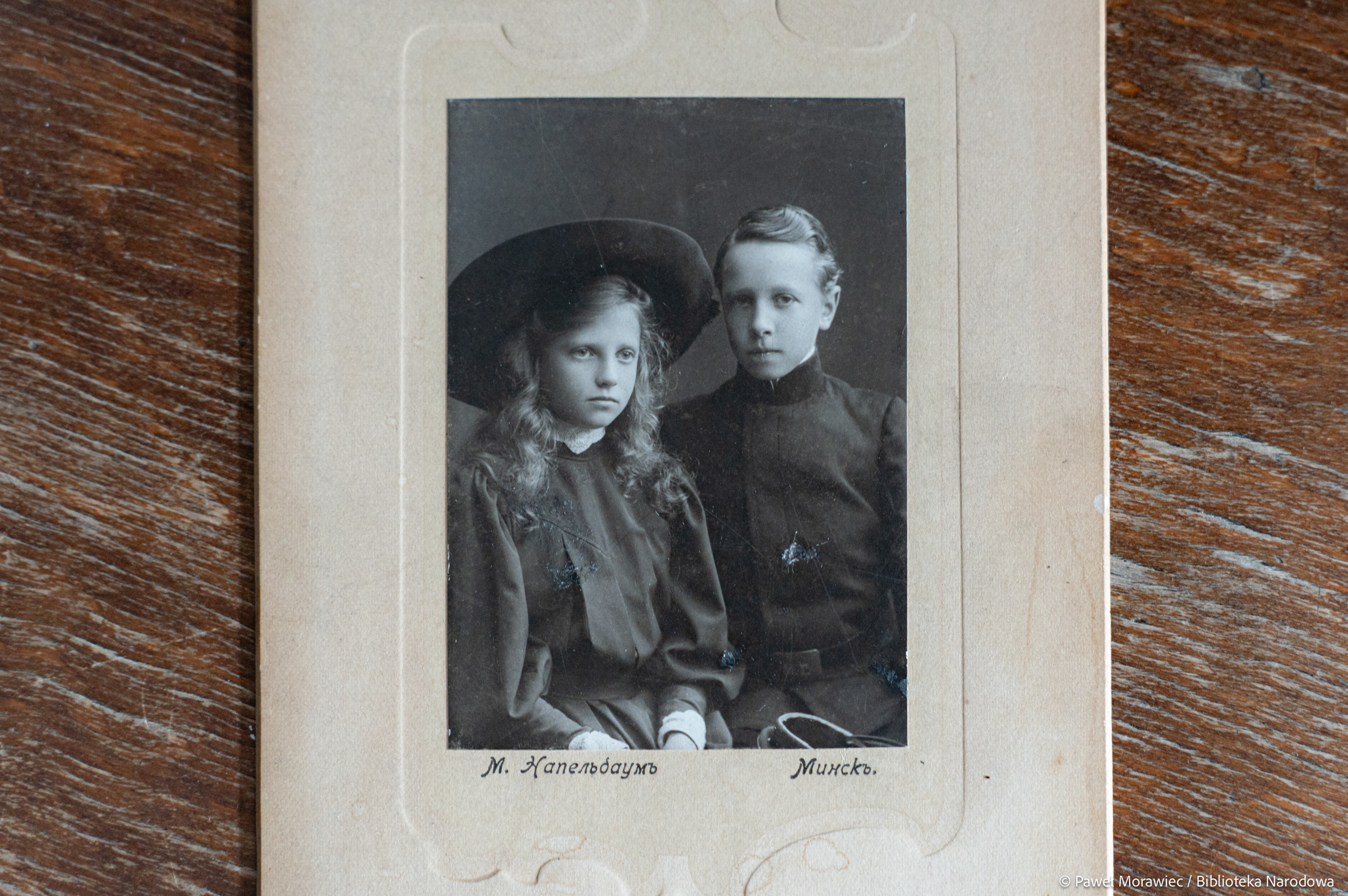
Two photographic albums are among the most remarkable treasures of the newly donated collection. One documents Tadeusz and Zofia Romer’s travels in Italy during the 1930s, while the other is dedicated to General Władysław Sikorski and covers the years 1939–1941. The latter was probably prepared for official purposes, possibly for display at the embassy, shortly after the general’s tragic death. Teresa Romer also made a particularly generous and touching gesture by donating an original photograph of great personal significance to her: a childhood portrait of her mother, Zofia, née Wańkowicz, taken in a photographic studio in Minsk around 1907.
The experiences of Tadeusz and Zofia Romer’s family are also documented in a diary kept by Ita, one of their three daughters, describing the journey from Shanghai and the family’s stay in Johannesburg, South Africa, in 1942–1943. There, they awaited further decisions regarding Tadeusz Romer’s diplomatic posting following the closure of the embassy in Tokyo and the diplomatic mission in Kuibyshev, the latter resulting from the Soviet Union’s severance of diplomatic relations with Poland after the discovery of the Katyn graves.
Another aspect of the family’s history is reflected in materials concerning Maria Hubisz, who served as governess to Tadeusz and Zofia Romer’s daughters in the 1930s and 1940s. A close friend of the Romer family, she oversaw the girls’ education and is still remembered with affection as the person who taught them to read.
The memorabilia from Teresa Romer’s family archive bring the history of the Romer family into the turbulent 20th century. Although they tell the story of one particular family, they also bear witness to the experiences of Poland and its people, sometimes in the most distant corners of the world.