The First Sea of Literature Festival: A Look Back
A concert, debates, meetings with writers and artists, a late-night poetry reading, a film screening, workshops for young people and the inaugural Czesław Miłosz Award Gala made up the programme of the Sea of Literature Festival. Held in Darłowo from 18 to 21 September 2026, the first edition of the festival explored different dimensions of loneliness. Here is a look back at four days of events.
Historical, familial, creative and émigré loneliness, changing ways of participating in culture, as well as the sense of isolation that may accompany success – throughout the festival, its central theme returned in conversations between writers, poets, historians, scholars, artists and public figures.
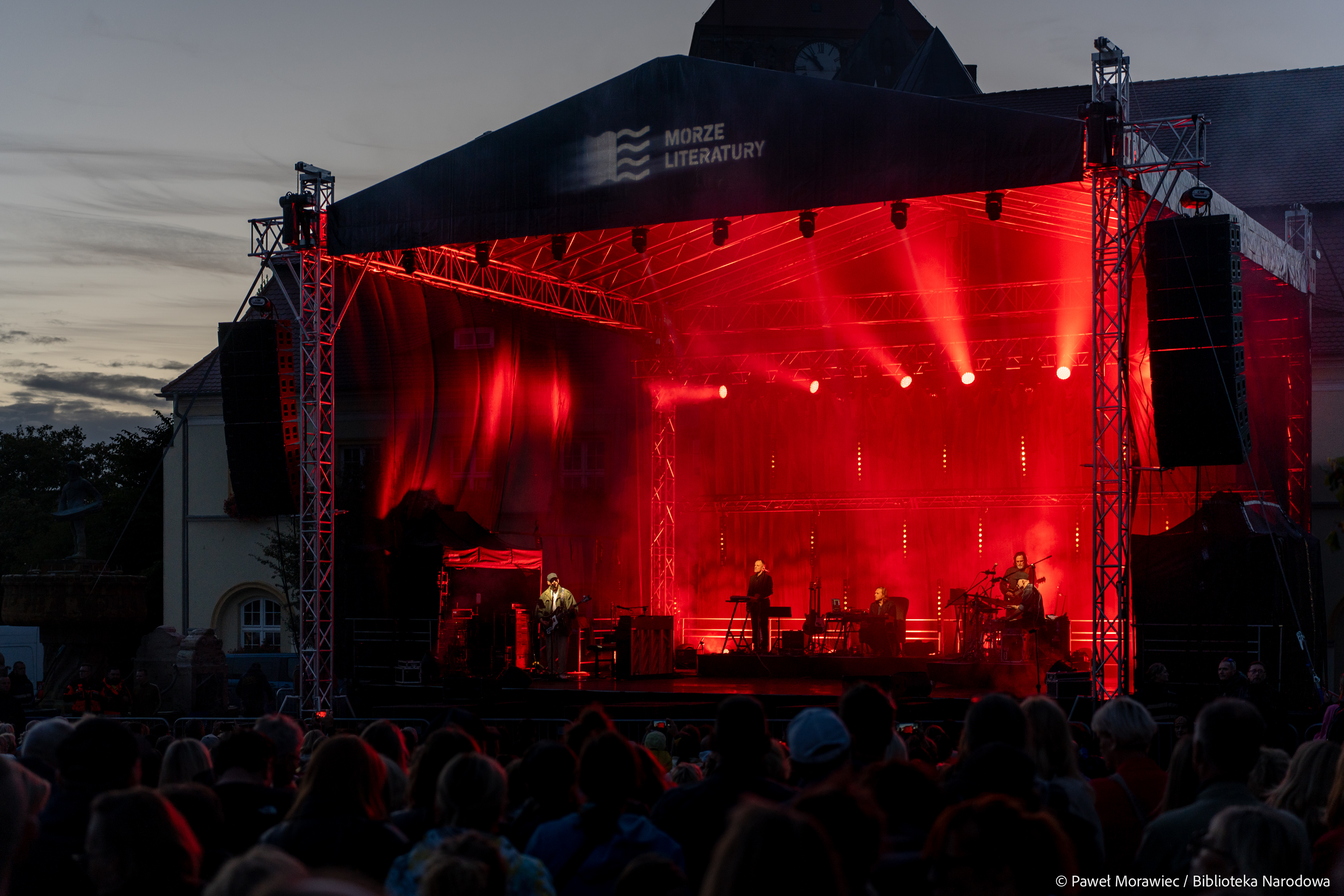
Music and Conversation to Open the Festival
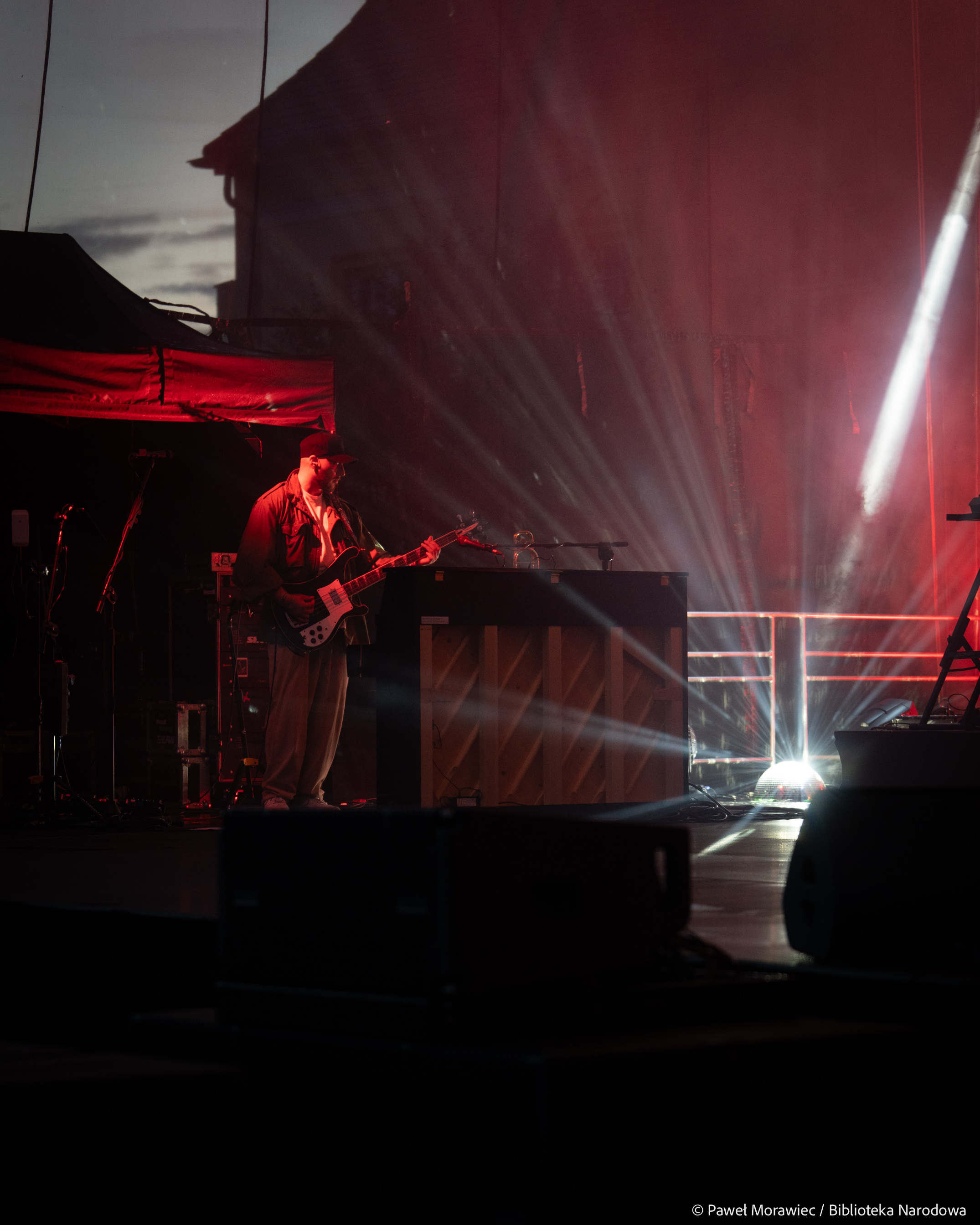
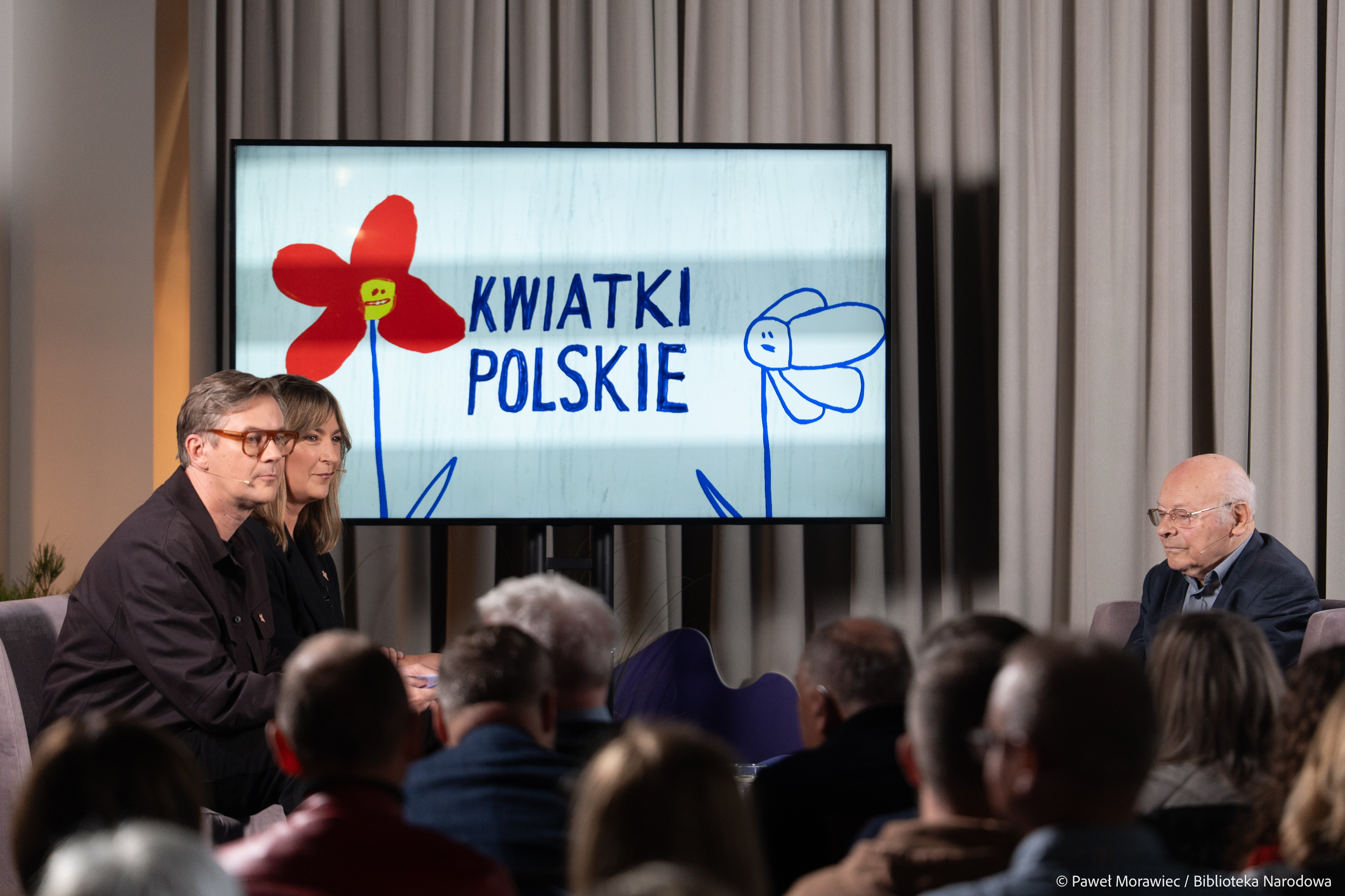
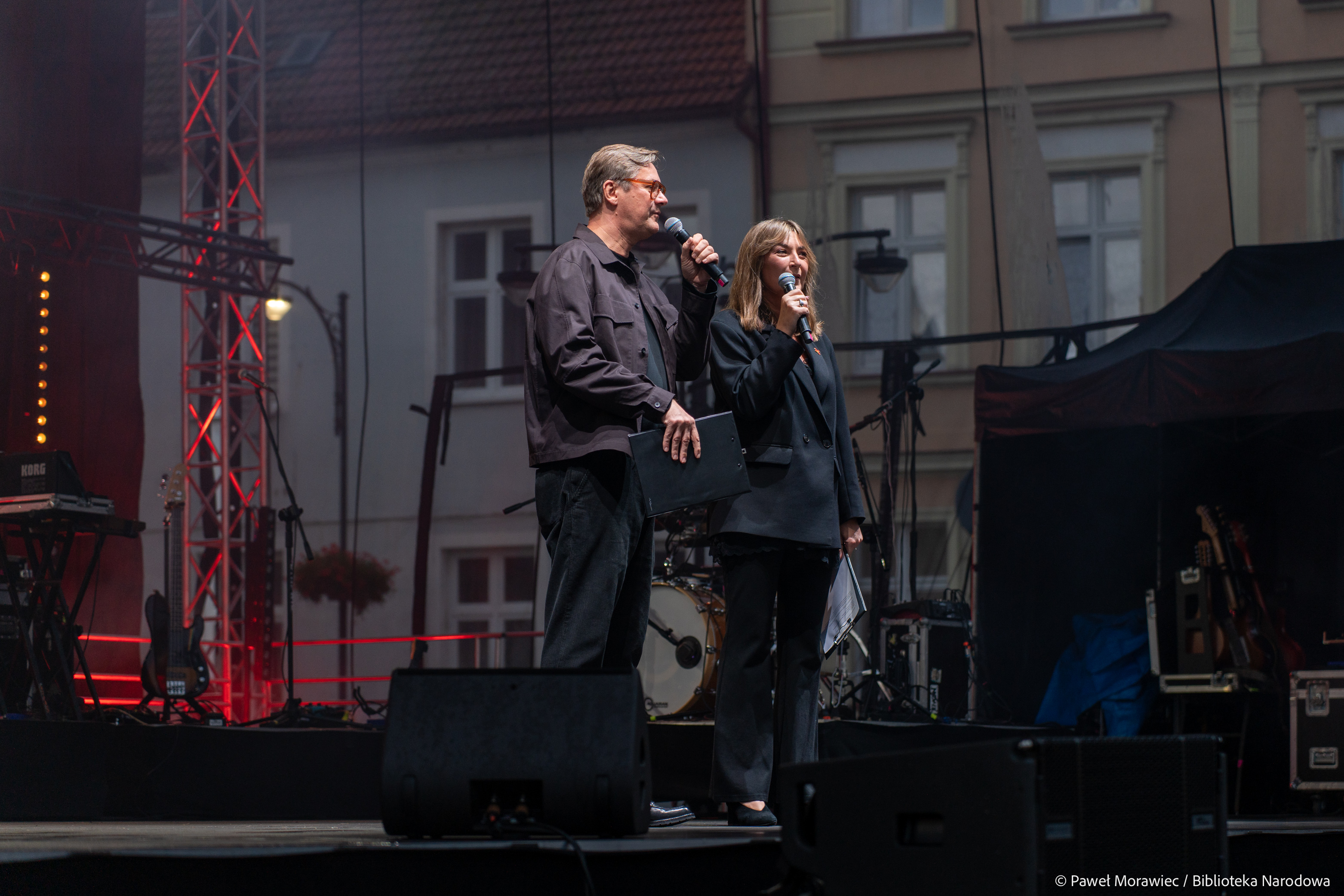
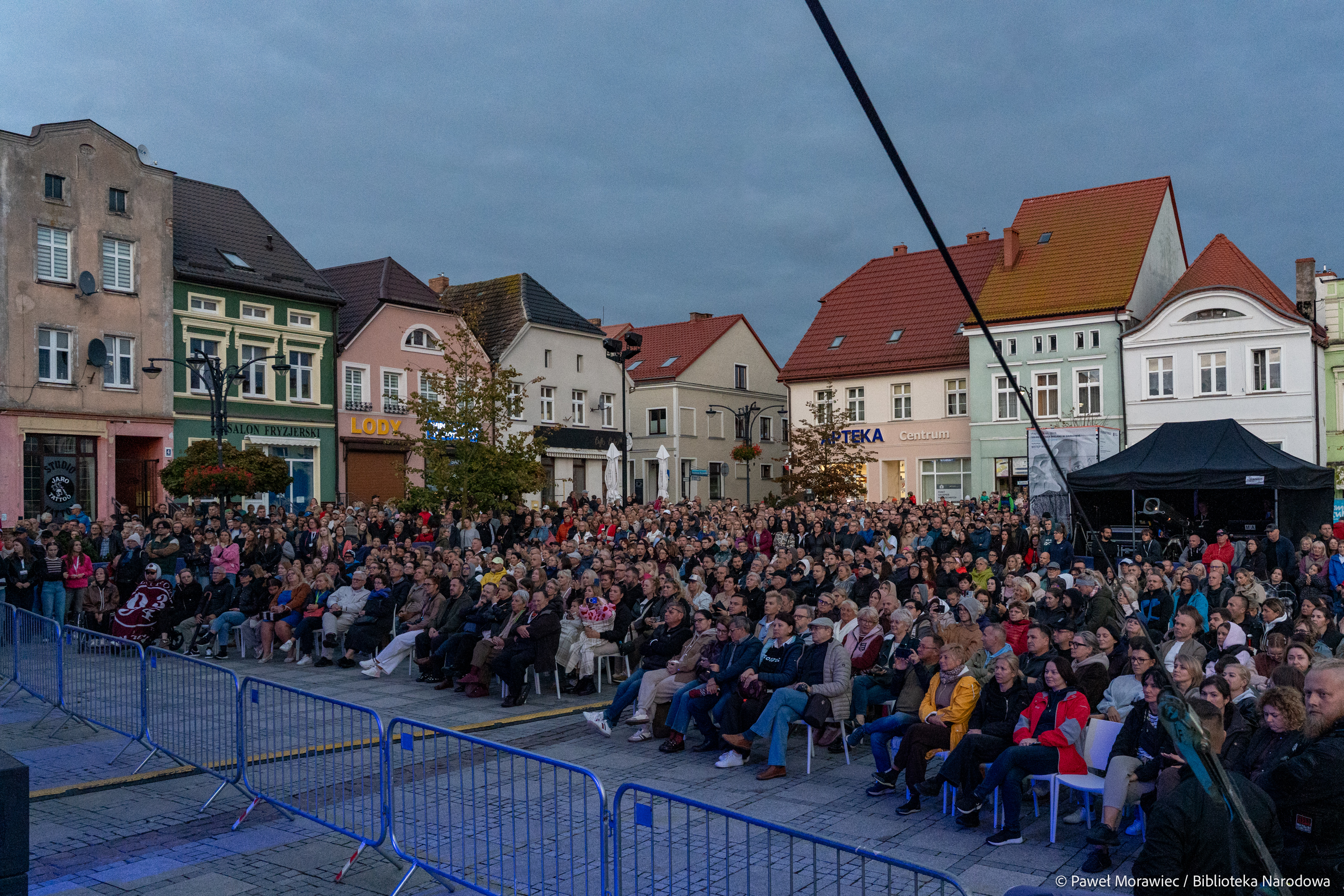
The Sea of Literature Festival began on Friday evening in Darłowo’s Market Square with a concert by Kortez, whose restrained style and focus on emotions, love, loss and longing resonated strongly with the theme of the festival’s first edition. The musician also took part in a special edition of Kwiatki Polskie, recorded with a live audience. The full conversation with Kortez and Professor Krzysztof Pomian was broadcast by TVP Info. It covered history, memory, identity, freedom and contemporary anxieties, as well as music, creativity and the relationship between an artist and an audience.
Professor Krzysztof Pomian stressed that “the fundamental condition is, above all, not to constrain historians or impose anything on them [...] and it is essential that history should be able to develop in pluralistic conditions”. Referring to one of the festival’s central themes, Kortez spoke about loneliness and ways of coping with emotions before and after concerts.
History, Success, Memory and Literature
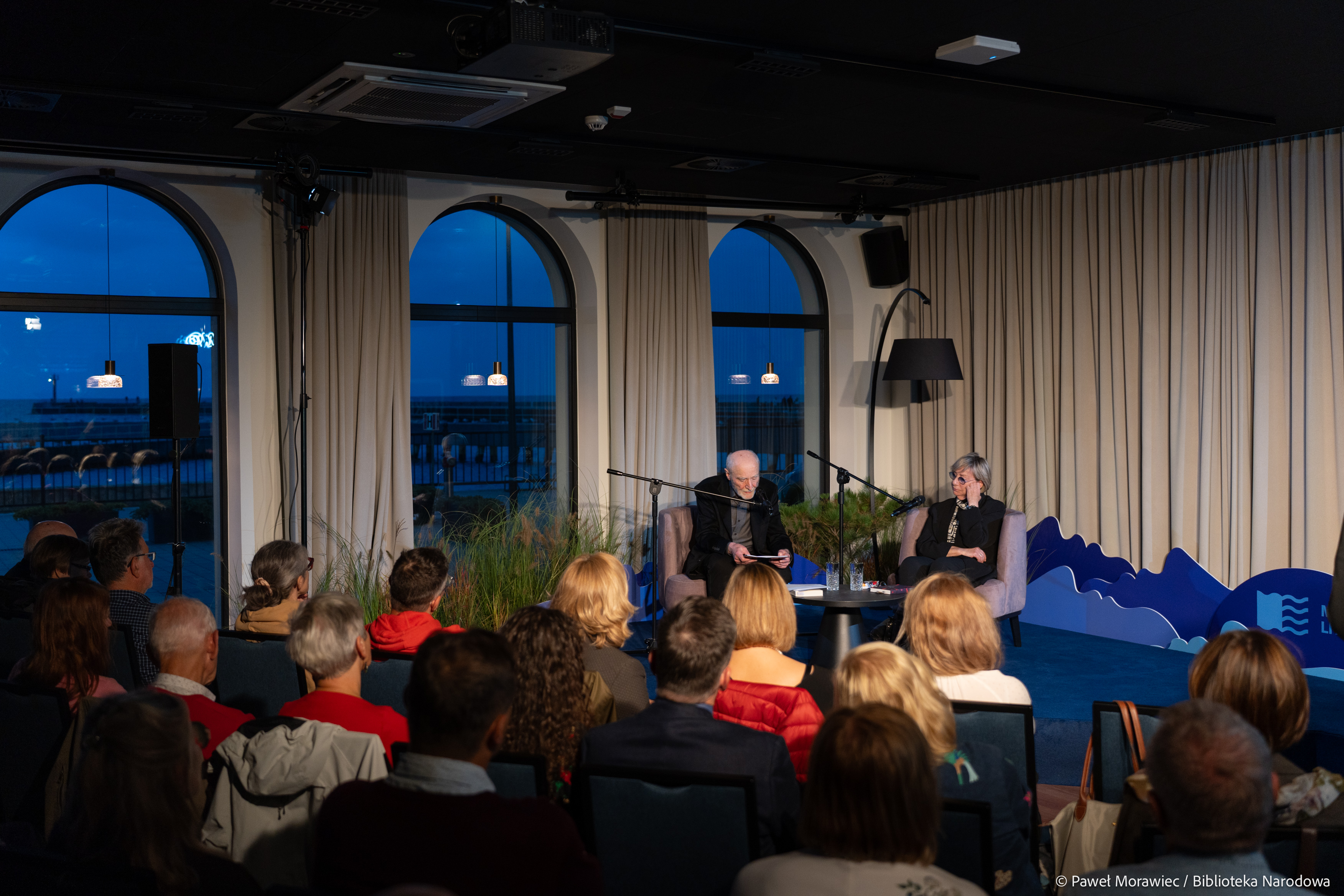
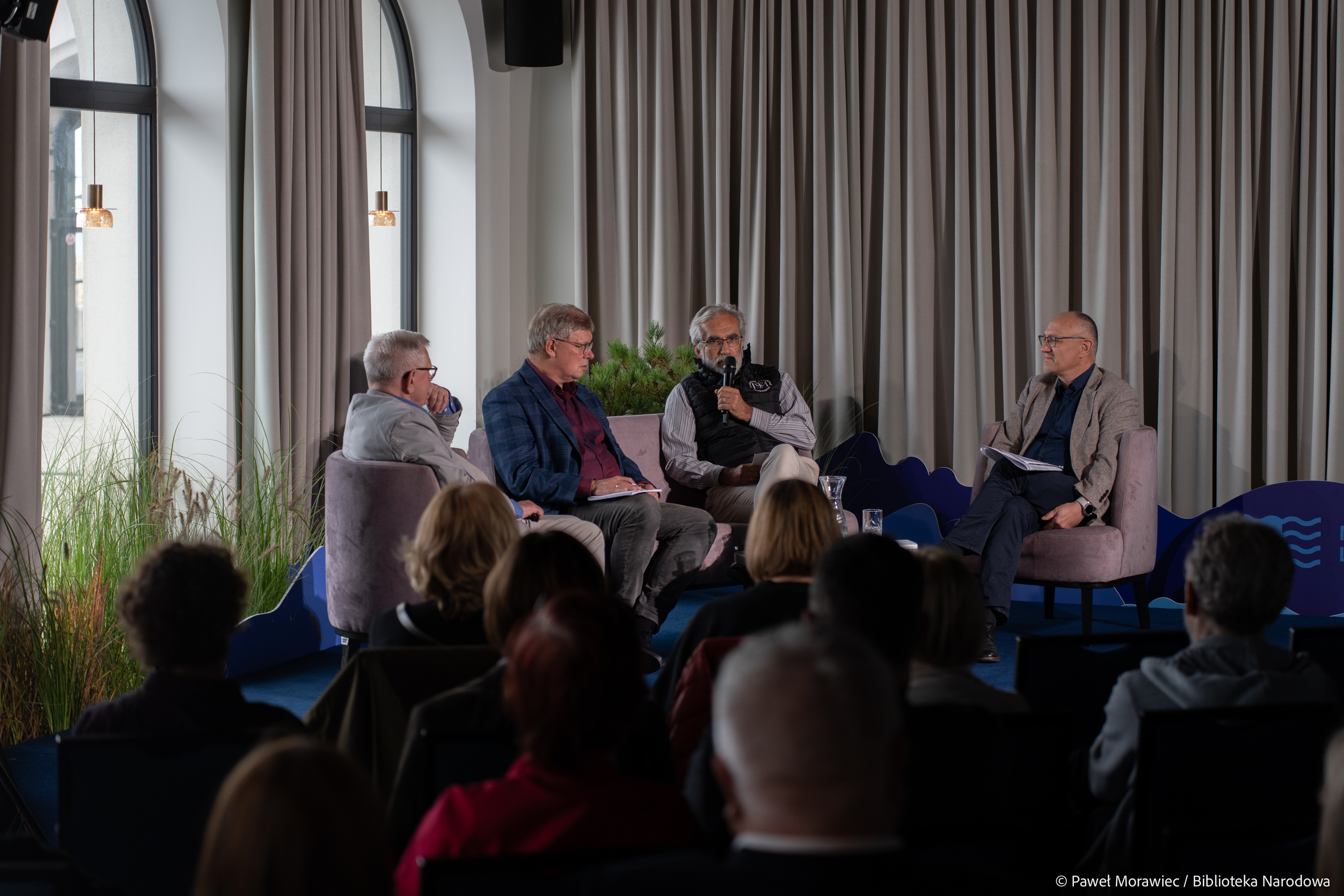
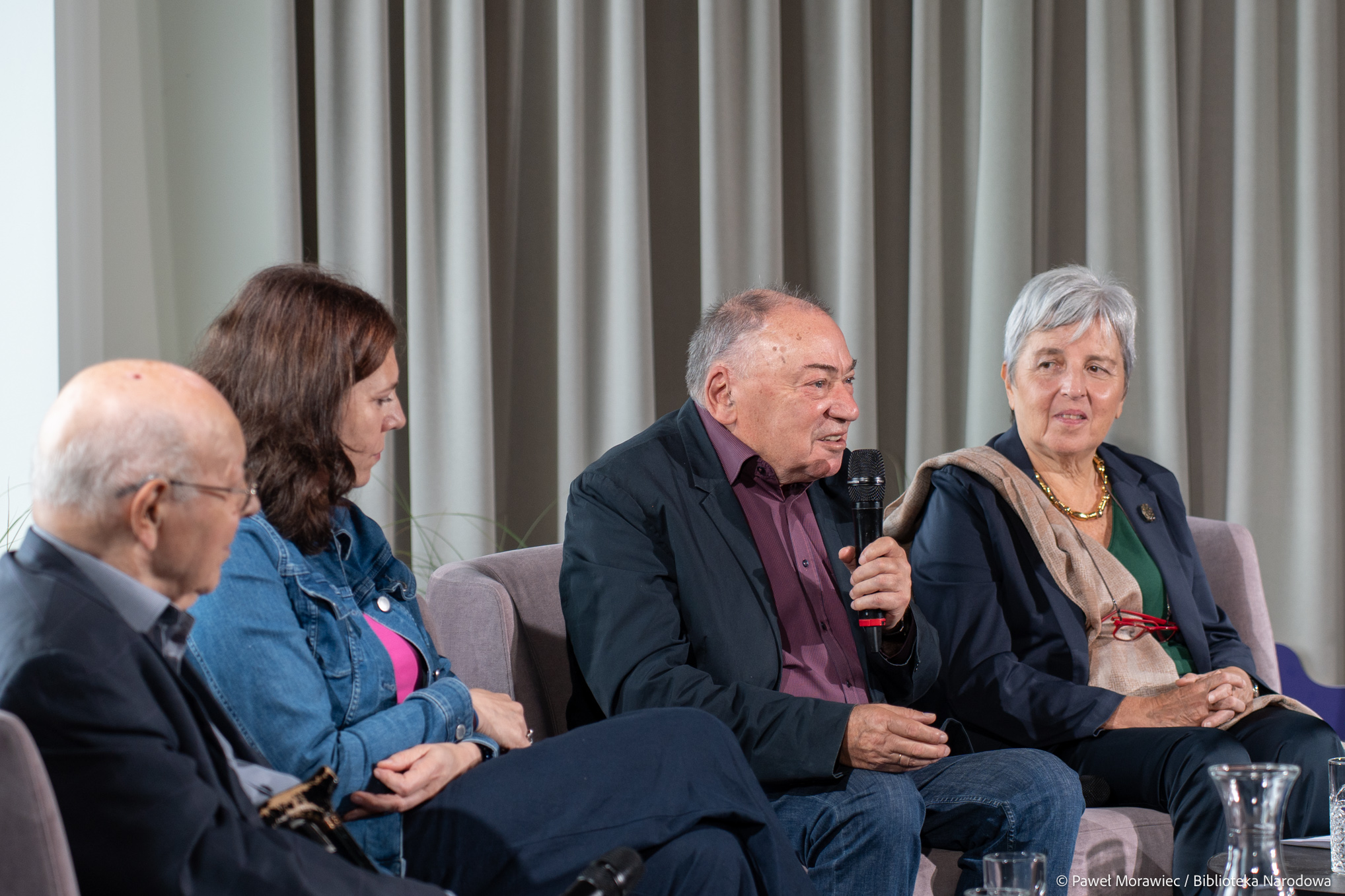
Saturday’s programme began with the debate Alone in the Face of History. Is the Past a Time of Innocence? Grzegorz Gauden, Professor Maciej Janowski and Professor Jarosław Hrycak, in a discussion moderated by Professor Marcin Zaremba, reflected, among other things, on the difference between collective memory and history, the role of historians in confronting national myths, and whether it is possible to speak honestly about crimes committed by one’s own community without falling into either accusation or justification.
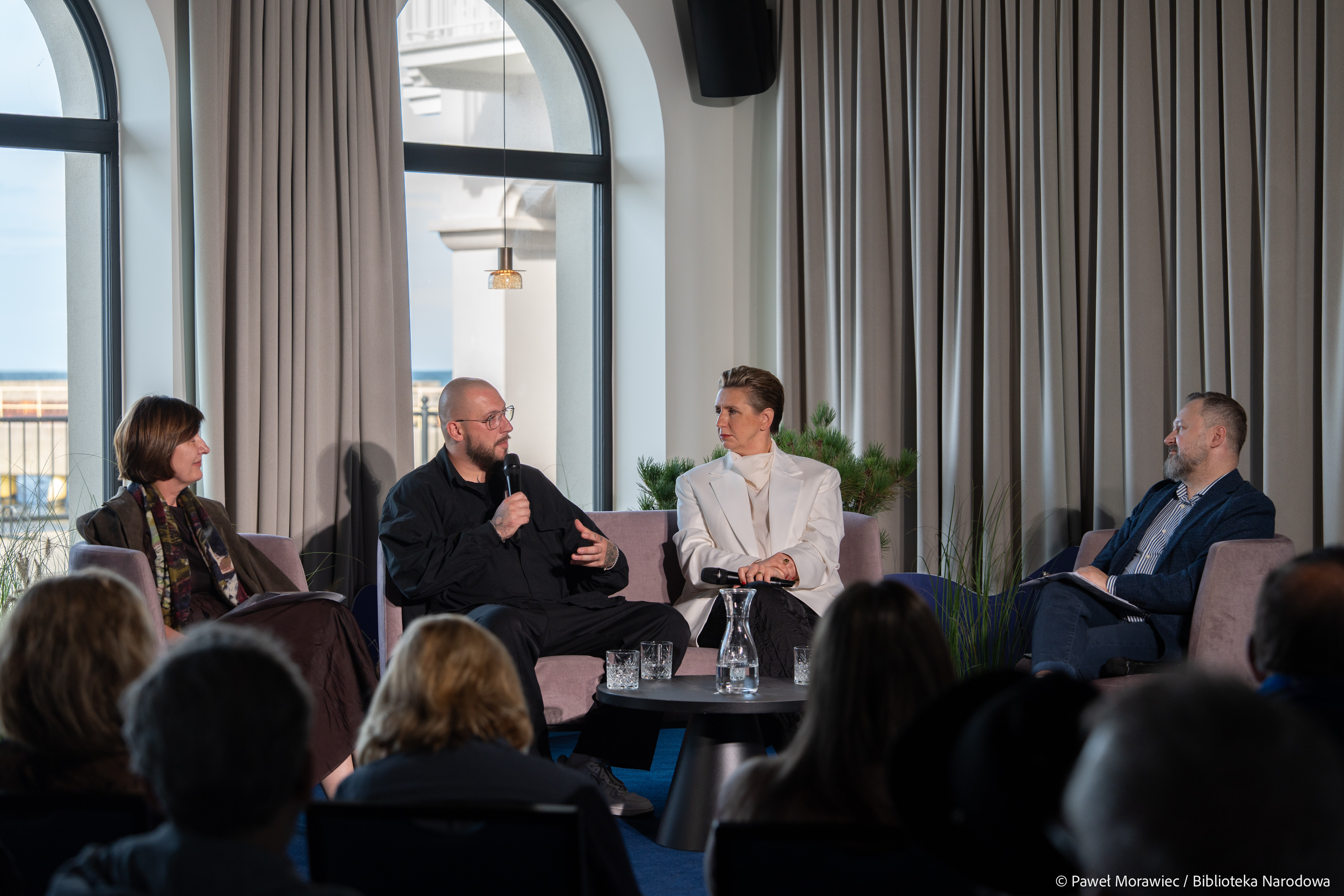
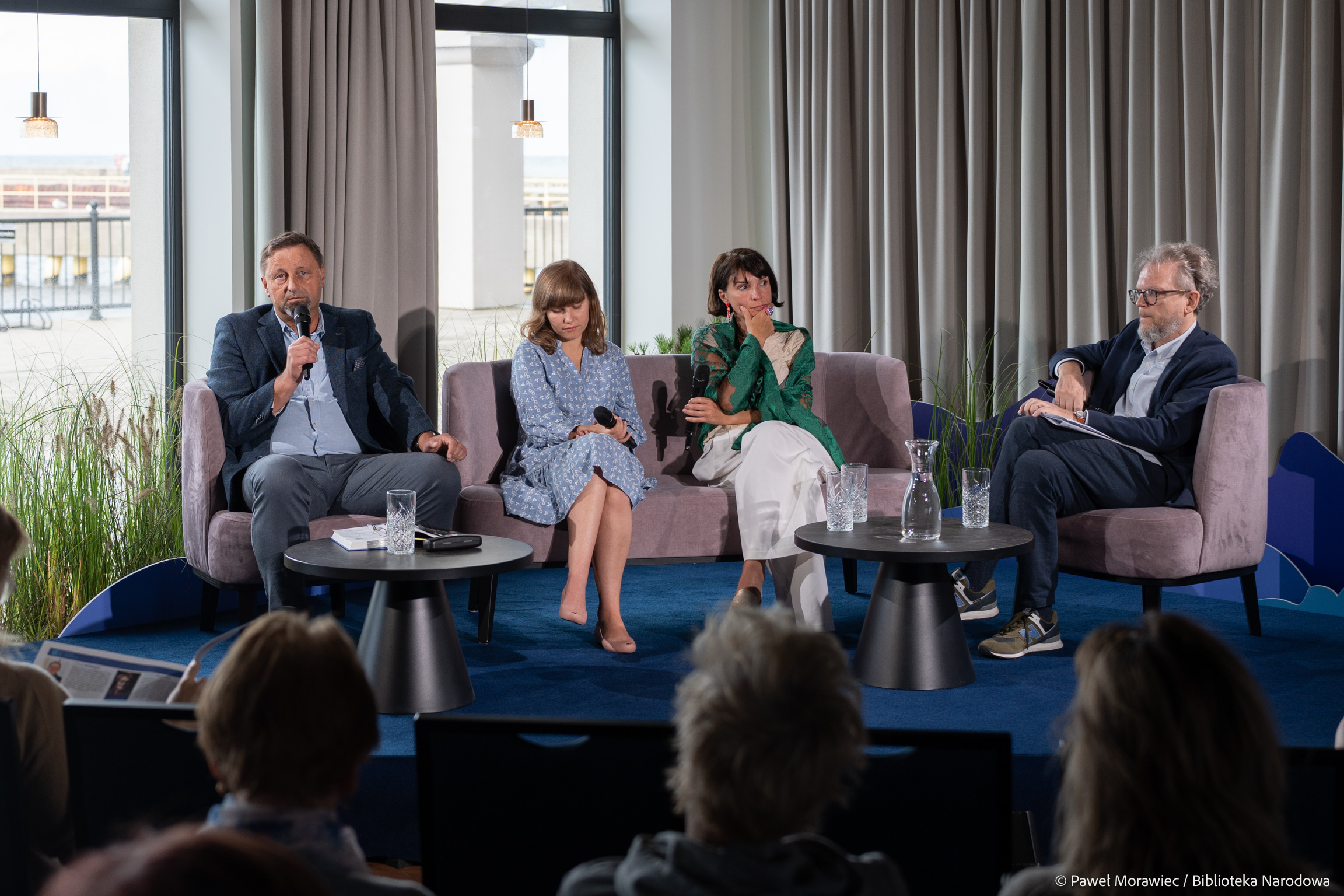
The next meeting, Loneliness at the Top, focused on the price of success and the isolation experienced by people who find themselves at the centre of public attention. Kortez spoke about solitude as a space for creative work, emphasising that it is valuable as long as it remains a matter of choice, and that becoming closer to oneself can also make it possible to build deeper relationships with others. Justyna Adamczyk, Kortez and Professor Joanna Zach, in a discussion moderated by Dr Tomasz Makowski, also reflected on the “loneliness at the top” referred to in the title – the experience of people who have achieved success but, along with it, face responsibility, pressure and the difficulty of sharing their fears.
The Director of the National Library observed that “we are at the beginning of a great age of loneliness” – affecting both young people, who in the digital world often only appear to remain connected with others, and older people, who increasingly live outside multigenerational family structures. He emphasised that this phenomenon is of considerable importance for culture and contemporary creativity.
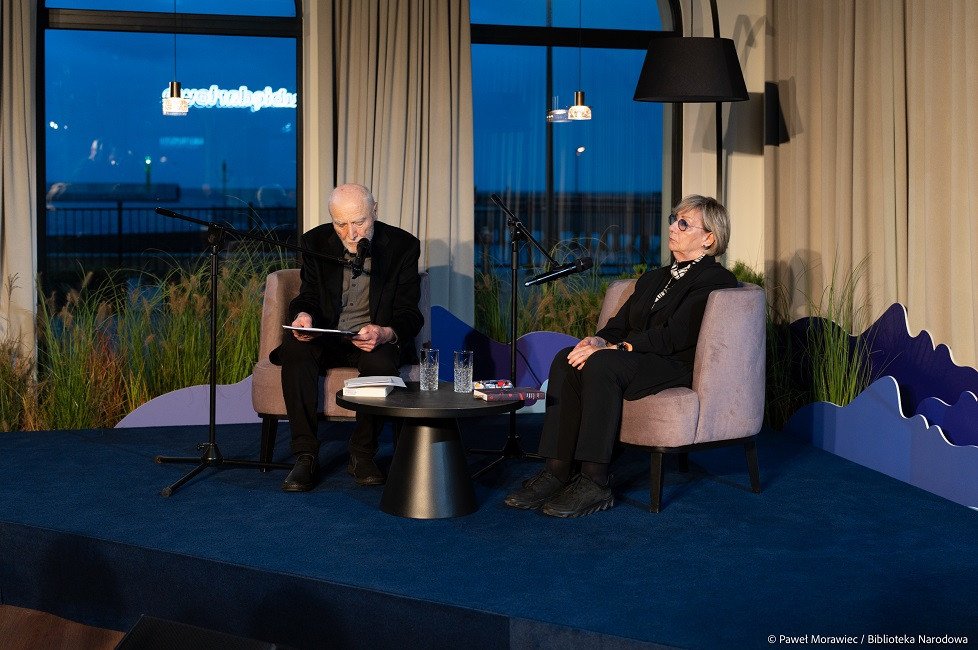
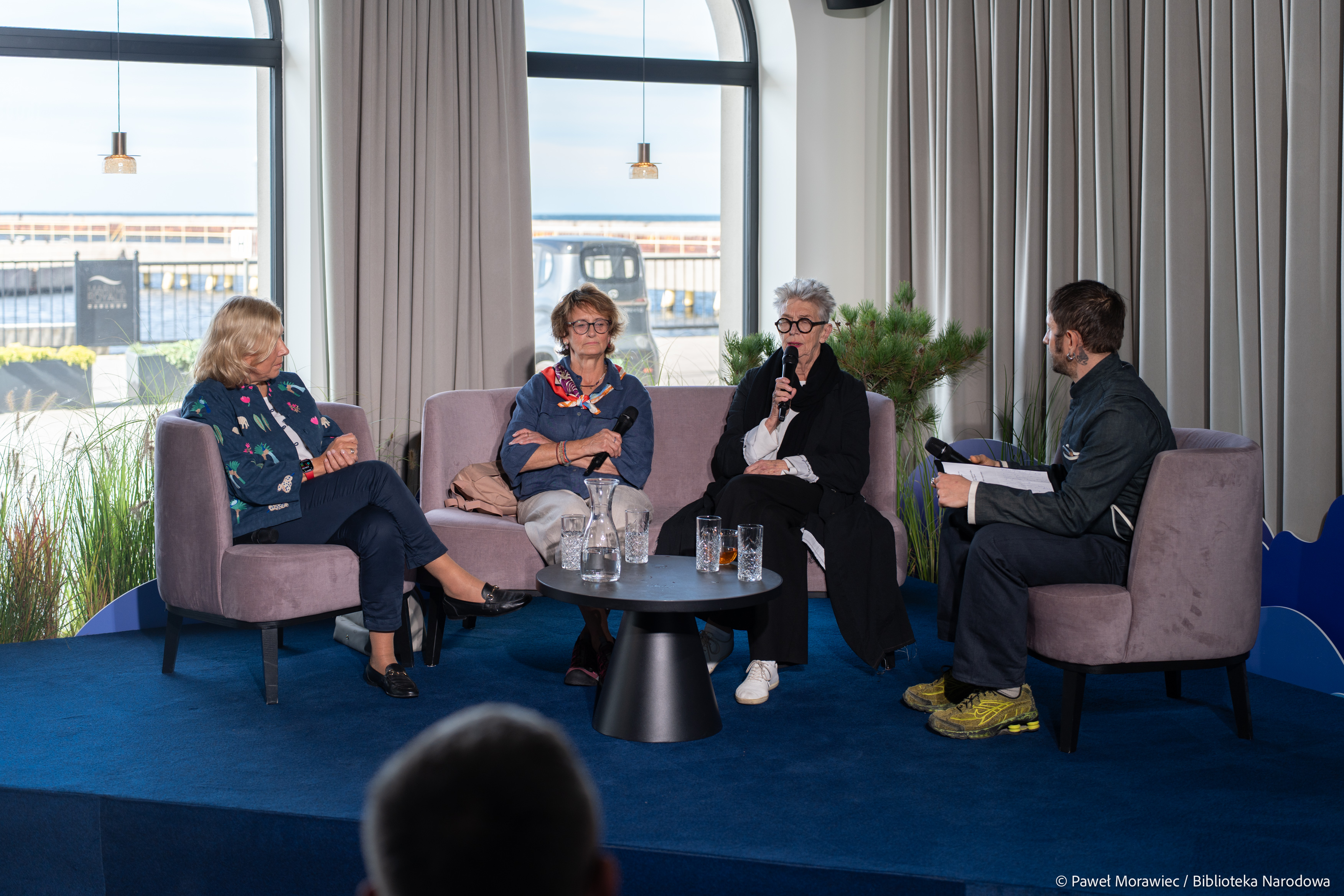
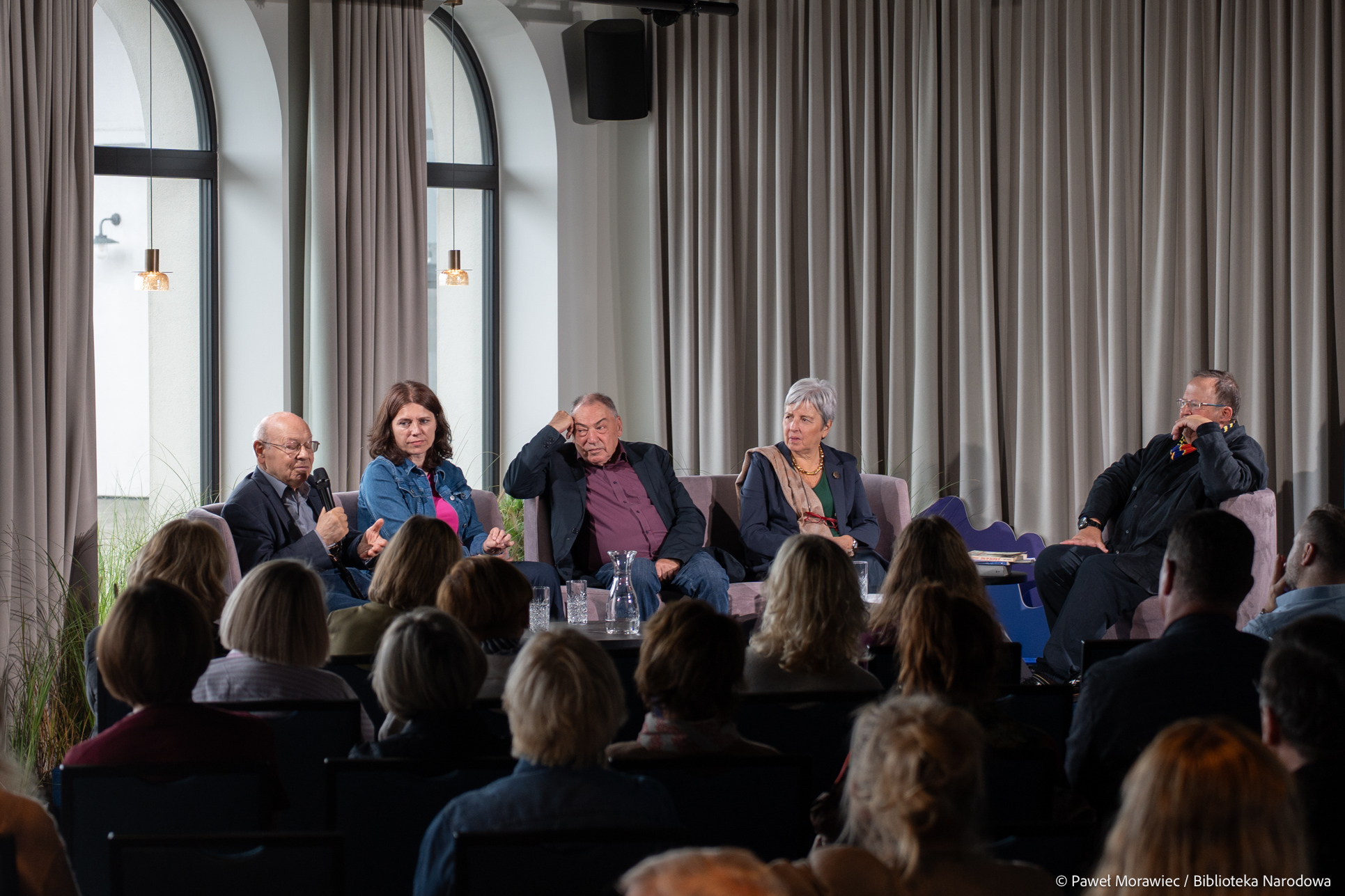
Dr Maria Dzieduszycka, Elżbieta Moczarska and Anda Rottenberg discussed the transmission of memory within families. The starting point for the debate Telling the Stories of Our Own Families. Alone in the Face of the Past of Those Close to Us was provided by family archives, memories, objects and gaps in family memory. The speakers discussed responsibility for inherited stories, the gradual discovery of relatives’ histories and the emotions that alter the way we look at the past. Their stories included experiences connected with Kazimierz Moczarski and with Zbigniew and Katarzyna Herbert. The meeting was moderated by Łukasz Wojtysko.
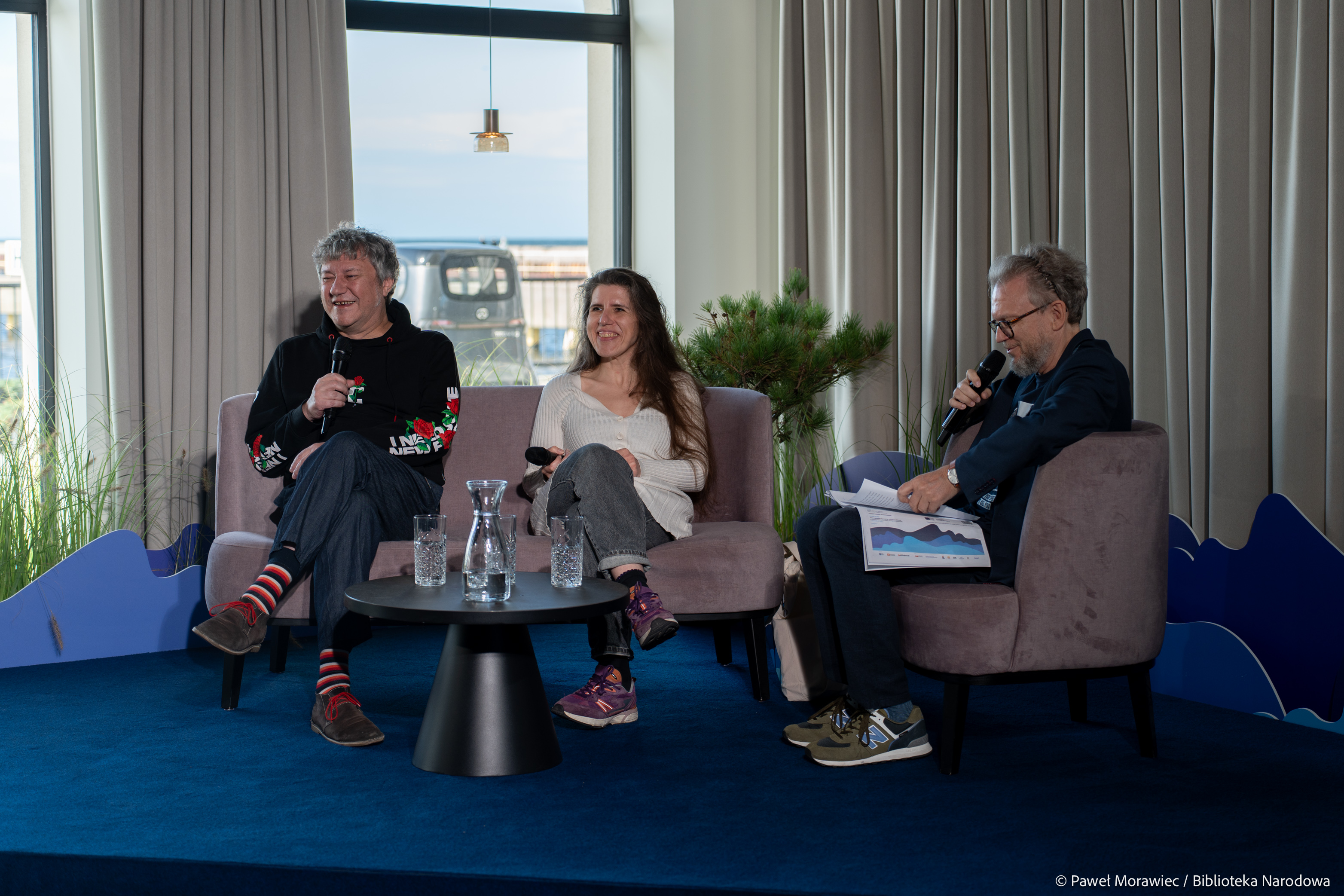
During the meeting Literature at the Beginning of the Age of Loneliness, Aldona Kopkiewicz and Adam Wiedemann discussed the tension between the need for solitude and the need for contact with others in both life and creative work. They considered whether literature can overcome loneliness and create a sense of closeness between writer and reader, as well as how relationships between writers are changing. The discussion was accompanied by readings of works by both poets.
Artificial intelligence was also discussed – its ability to create poetry and the question of whether it could develop an independent creative voice of its own. In place of Irek Grin, the meeting was moderated by Jacek Chmielewski, who opened the discussion of AI by wondering whether “perhaps poets will be the last line of defence”.
Late-Night Poetry Reading
Saturday’s discussions concluded with a late-night poetry reading. Ewa Lipska and Ryszard Krynicki read from their work, and the encounter between the two poets was one of the festival’s major literary events. The theme of loneliness was also strongly present during the evening – Ewa Lipska read her poem beginning with the words: “Loneliness has no body, even when it embraces us. It is treacherously empty like a box that once held thoughts.”
The programme also included poems by Czesław Miłosz: Waltz, Campo di Fiori, A Song on the End of the World and You Who Wronged, recalling the important place occupied by the poet in the programme and in the idea behind this year’s festival.
The First Czesław Miłosz Award Gala
The evening of 19 September concluded with the Czesław Miłosz Award Gala. The first recipient of the Award, established by the National Library of Poland, was Professor Krzysztof Pomian – historian, philosopher and essayist – who was honoured for his lifetime achievement.
The Jury recognised Professor Pomian’s body of work as a humanistic achievement of exceptional intellectual stature and European significance, combining the erudition of a historian, the insight of a philosopher and the artistry of an essayist.
A particularly significant moment of the ceremony was a statement by Antoni Miłosz, son of Czesław Miłosz, who drew attention to the affinity between the intellectual outlook of the Award’s patron and that of its first recipient.
Read the full report from the Czesław Miłosz Award Gala.
Emigration, Biography and Participation in Culture
Sunday’s programme began with the debate Loneliness in Emigration. Seweryn Blumsztajn, Dr Marta Herling, Aleksandra Majdzińska and Professor Krzysztof Pomian discussed different forms of exile and life between countries, languages and communities. They referred both to their own experiences and to the lives of post-war émigrés associated with the Paris-based Kultura. They spoke about Gustaw Herling-Grudziński, Jerzy Giedroyc and Józef Czapski.
An important theme of the discussion was the feeling of living between two places – when, after years spent abroad, a person no longer feels entirely at home either in exile or in their homeland. The meeting was moderated by Andrzej Mietkowski, who, with the help of archival recordings, brought the voices of these writers back into the discussion.
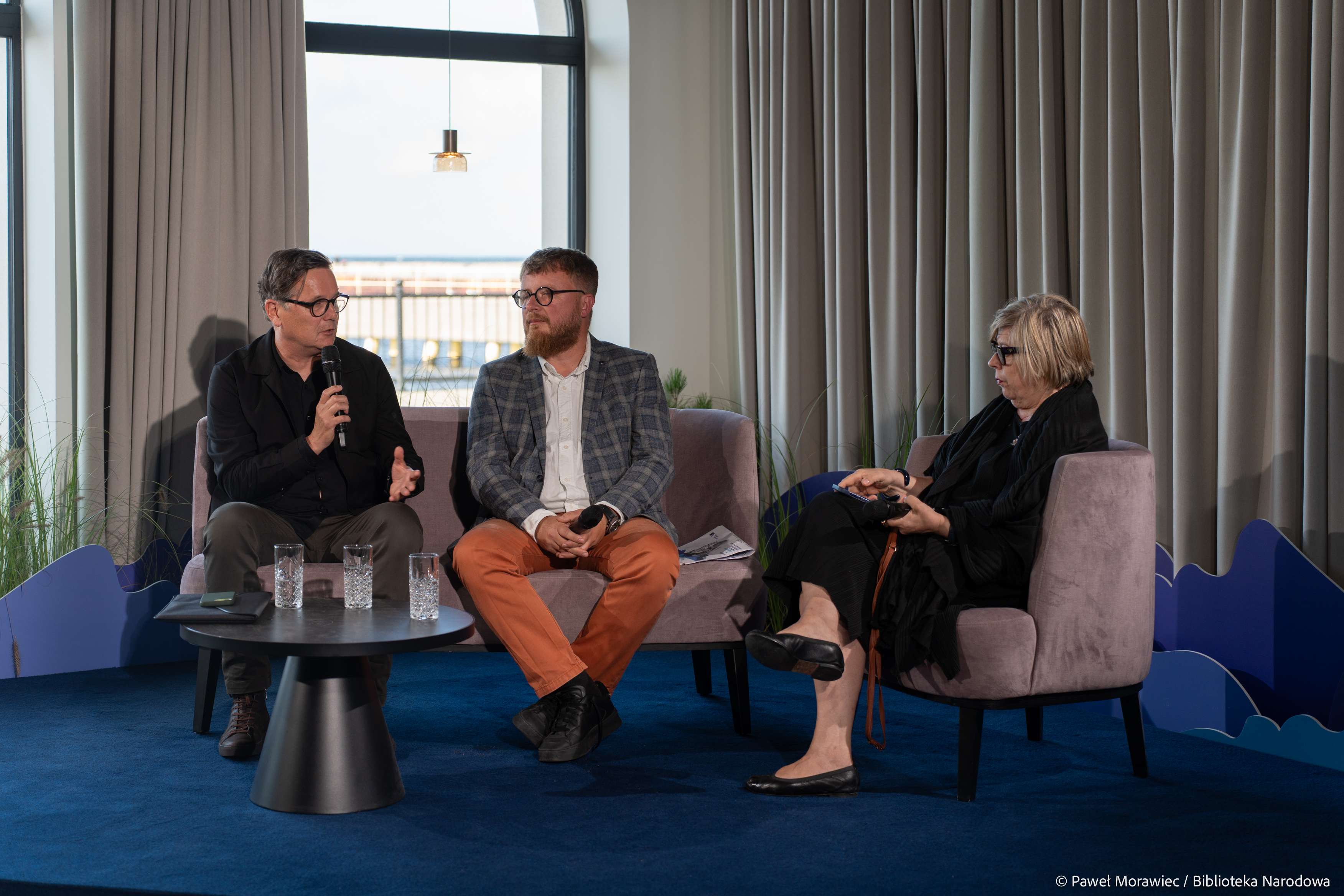
The meeting Telling the Story of Someone Else’s Life. Are We and Will We Be Lonelier Than Before? featured Professor Marek Bernacki, Aleksandra Tarnowska and Dr Katarzyna Kwiatkowska-Moskalewicz. The discussion focused on the boundaries between knowledge and imagination, the author’s responsibility towards their subject, and the differences between the work of a biographer, reporter and novelist. The participants considered where the possibility of truly knowing another person ends, and what role sources, interpretation and imagination play in telling the story of someone’s life. The meeting was moderated by Jacek Chmielewski.
In the final debate, The Loneliness of the Cultural Audience, Professor Roman Chymkowski and Professor Marek Krajewski examined contemporary ways of reading, watching, listening and participating in culture. They discussed the growing importance of screens and individual consumption of content, but also the social role of libraries, museums, cultural centres and other institutions.
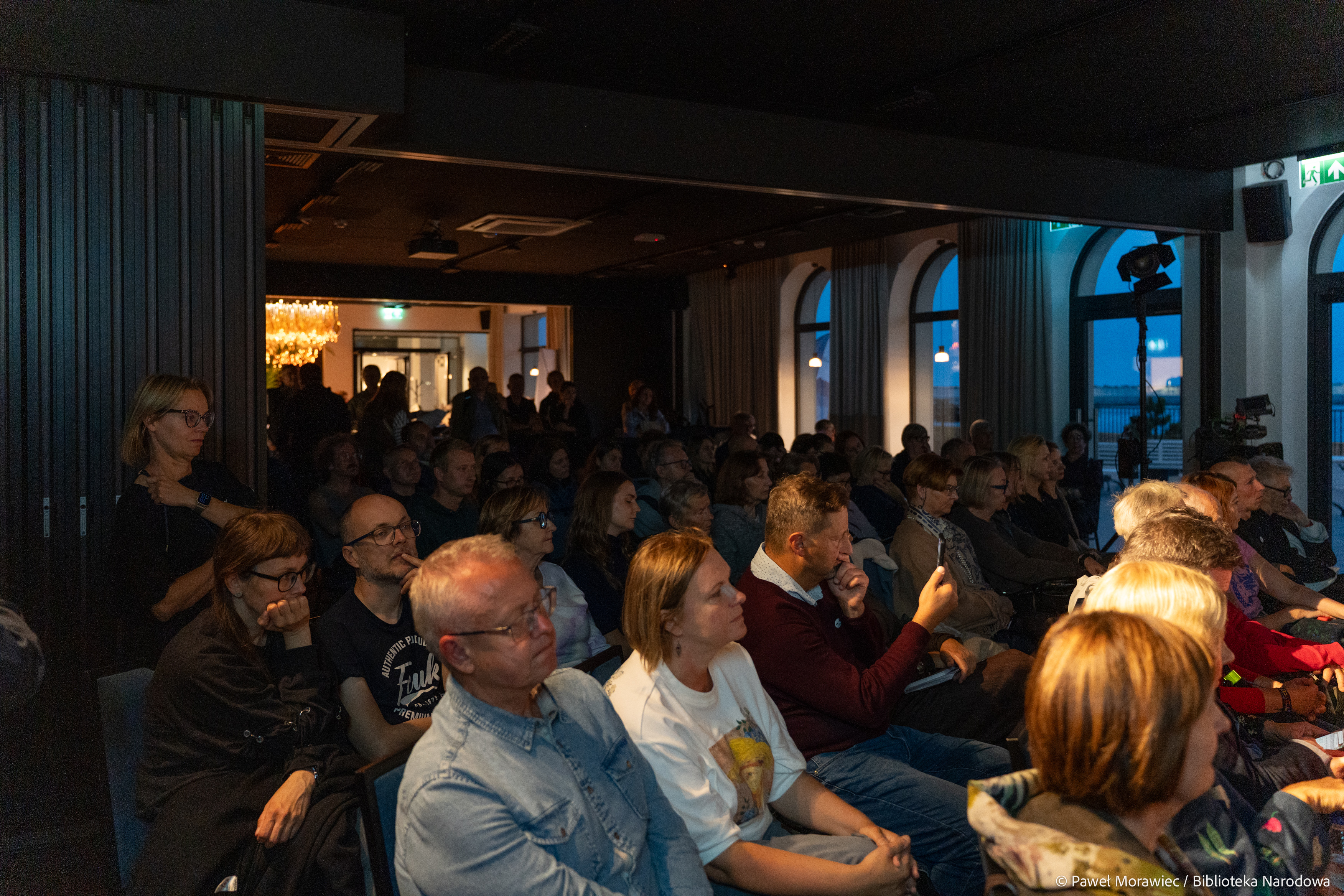
Considerable attention was devoted to libraries and similar institutions as spaces for direct contact, encounters with different people and the building of social relationships. The speakers also noted that many people remain culturally active without using traditional institutions, while the internet – despite the risks associated with algorithmisation and the replacement of direct contact – can also create lasting communities of conversation. The meeting was moderated by Beata Chmiel.
Additional Events
Sunday afternoon was devoted to film. A special screening of Candidates for Death, directed by Maciej Cuske, took place at the Bajka Cinema. After the screening, Joanna Pawluśkiewicz spoke with the director and one of the film’s protagonists, Rafał Waraczewski.
The final day of the festival belonged to young readers. On Monday, 21 September, the SKŁO 44 Cultural Centre hosted literary and theatre workshops as well as improvisation classes for young people. Participants had an opportunity to discover that literature can serve as a starting point for creative work and for developing imagination and skills useful not only at school but also in everyday life. Among the inspirations for their joint activities was the plot of a book.
A Successful First Edition
The Sea of Literature Festival presented loneliness not only as an experience of isolation, but also as a starting point for creativity, reading and conversation. In Darłowo, individual experiences met history, memory, poetry, film and cultural research. Although we read alone, literature allows us to recognise ourselves in the stories of others and to create a sense of community across the boundaries of time, place and personal experience.
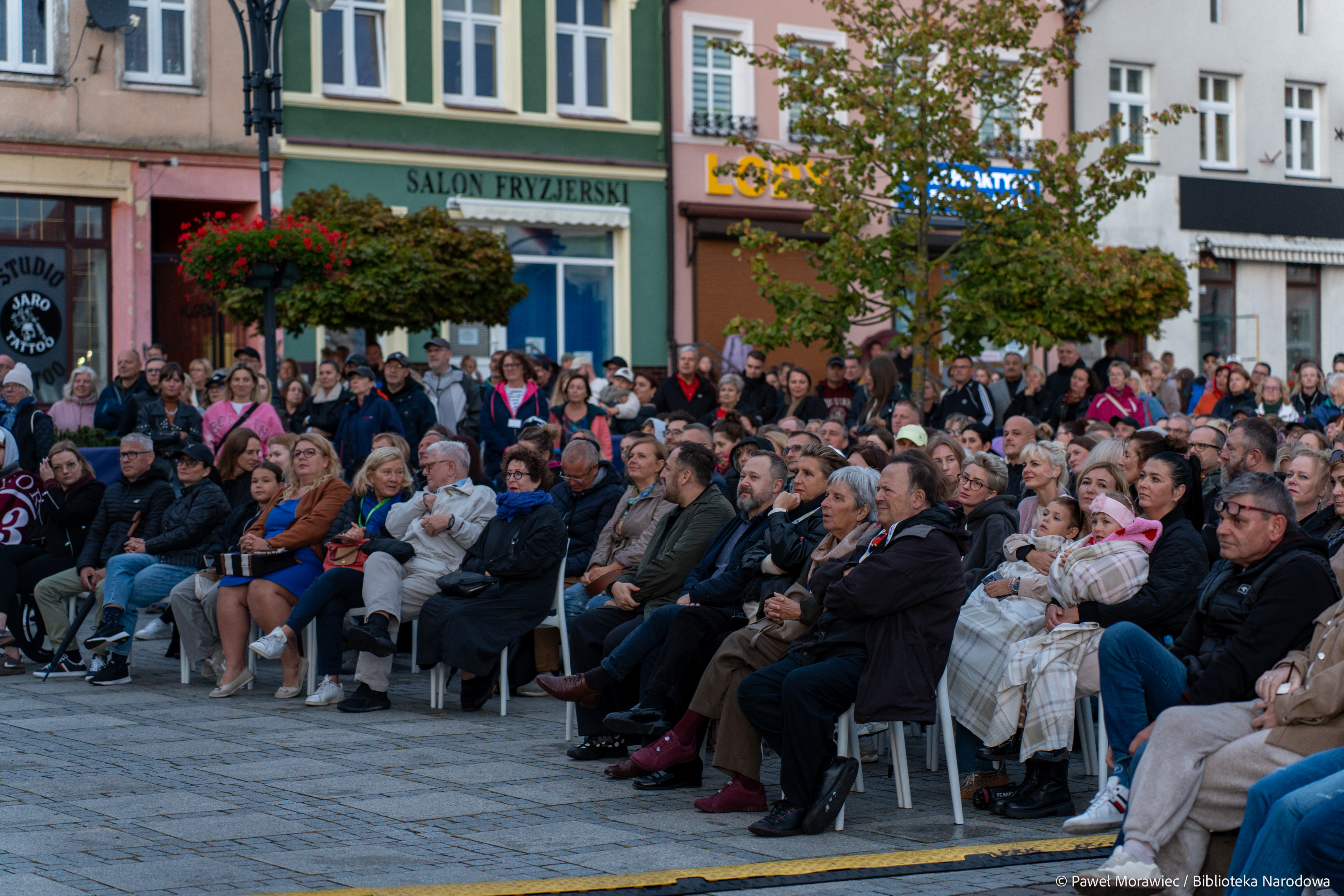
There was no shortage of people in Darłowo who wanted to be together – during concerts, conversations, readings and meetings. The first edition of the festival showed that literature can become a space for encounter even when loneliness is the starting point for the conversation.
To paraphrase a passage from Jacek Chmielewski’s essay accompanying the festival: “Loneliness resembles the sea. Literature resembles the sea too.”
Loneliness, like the sea, can attract and repel, separate us, but also open up a space for reflection. The festival showed that literature can be one way of crossing that boundary – leading from individual experience towards an encounter with another person.
The next edition of the festival will take place next year.
The Sea of Literature Festival was funded by the Polish National Foundation.
The event was organised by the National Library of Poland, the Agnieszka Osiecka Municipal Public Library in Darłowo and the Demokracja Foundation.
The festival partners were the City of Darłowo, Sea Collection by Marina Royale, the Darłowo Cultural Centre and the Castle of the Pomeranian Dukes.