Special Presentations of Medieval and Renaissance Music Collections during the MedRen Conference
From 6 to 10 July, Warsaw hosted the 54th edition of MedRen, the international Medieval and Renaissance Music Conference, organised by the University of Warsaw in cooperation with the Institute of Art Polish Academy of Science and the Fryderyk Chopin Institute. For the first time in the history of the conference, which has been held annually in different locations around the world since 1972, Poland served as the host country.
More than 300 participants from five continents and 26 countries – including scholars, students and performers of early music – attended what was the largest musicological event ever held in Poland. Alongside concerts and exhibitions, special presentations of collections at Warsaw libraries accompanied the five intensive days of academic sessions.
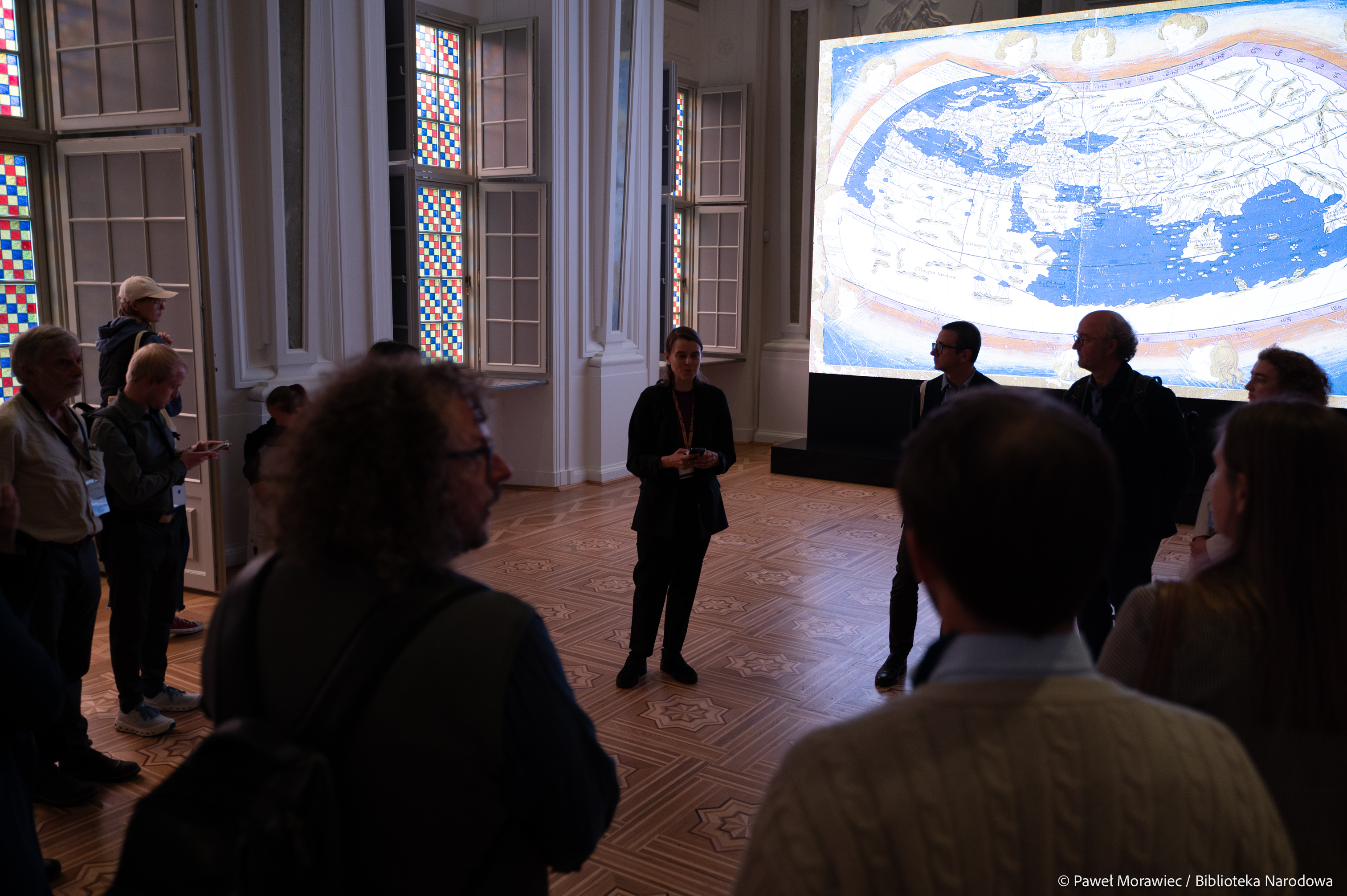
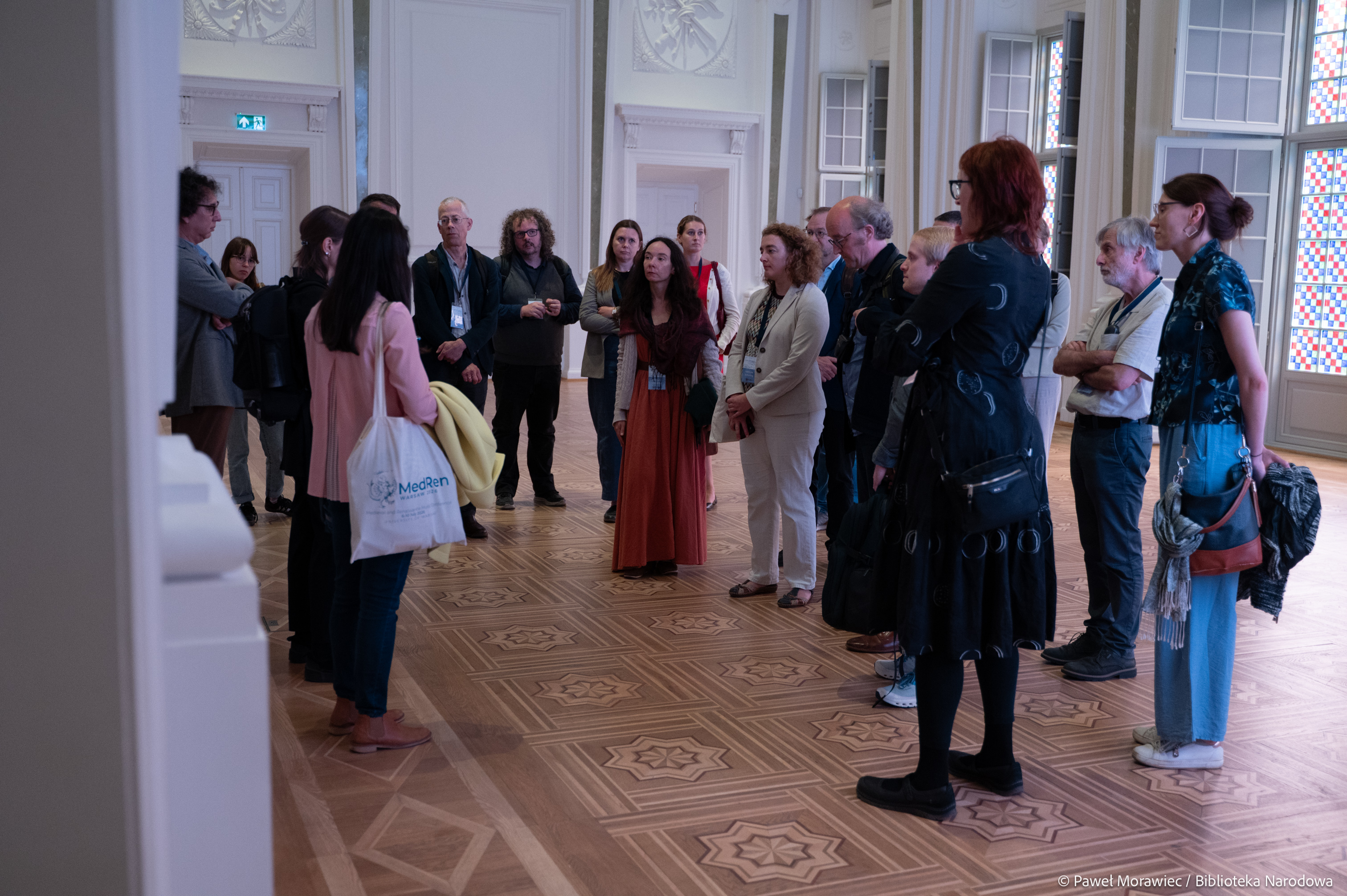
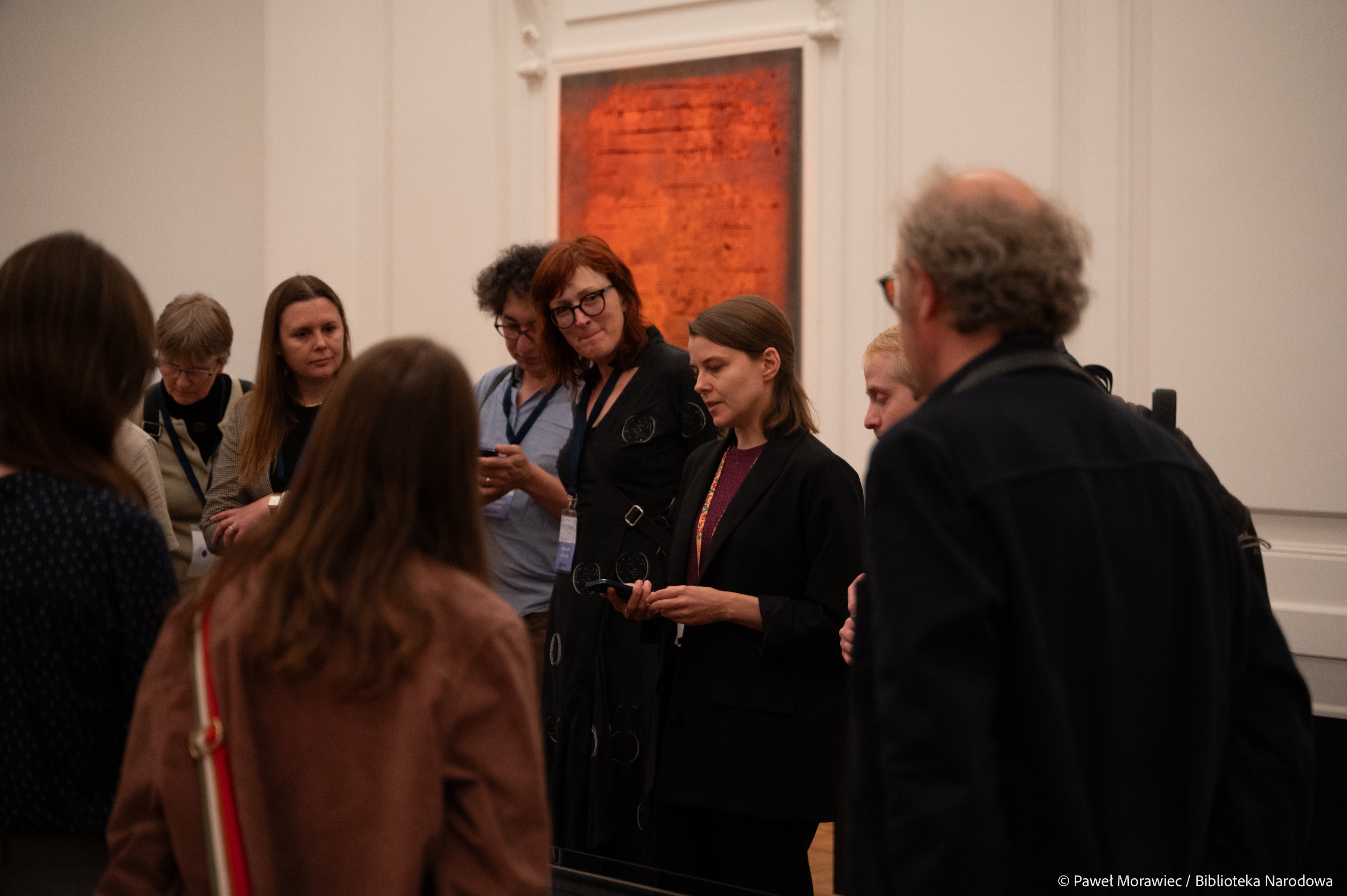
As a partner of this important event, the National Library of Poland prepared a guided tour of the permanent exhibition of written heritage at the Palace of the Commonwealth, led by Dr Maciej Szablewski, the Director’s Representative for International Relations and Head of the Reading Rooms Department, as well as special presentations of medieval and Renaissance music materials, accompanied by curatorial commentary from Sonia Wronkowska of the Music Collections Department.
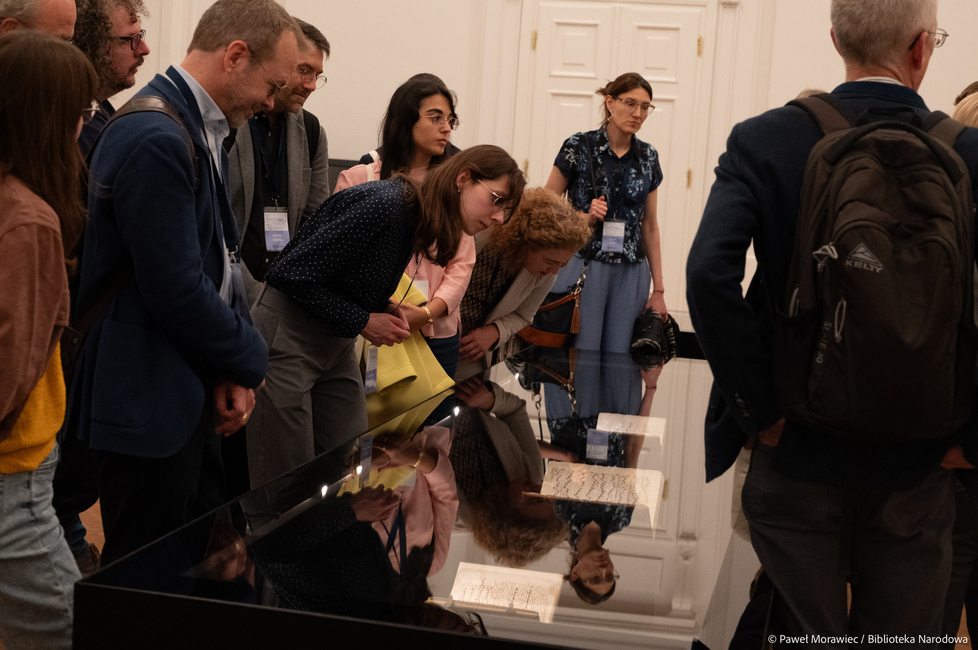
The so-called Krasiński Codex (Rps 8054 III), displayed in the former Krasiński Palace, attracted considerable interest. One of the most valuable musical artefacts held in Polish collections, this manuscript originated in Kraków and dates from around 1440. It contains works by the Polish composer Mikołaj of Radom, as well as by leading Western European composers of the period, including Johannes Ciconia. The Krasiński Codex is also well known in scholarly discourse for containing the earliest documented use of the Latin word opus in reference to a musical composition.
The presentations corresponded particularly well with a concert given as part of the conference by the Swiss ensemble La Morra, which performed works preserved in the manuscript.
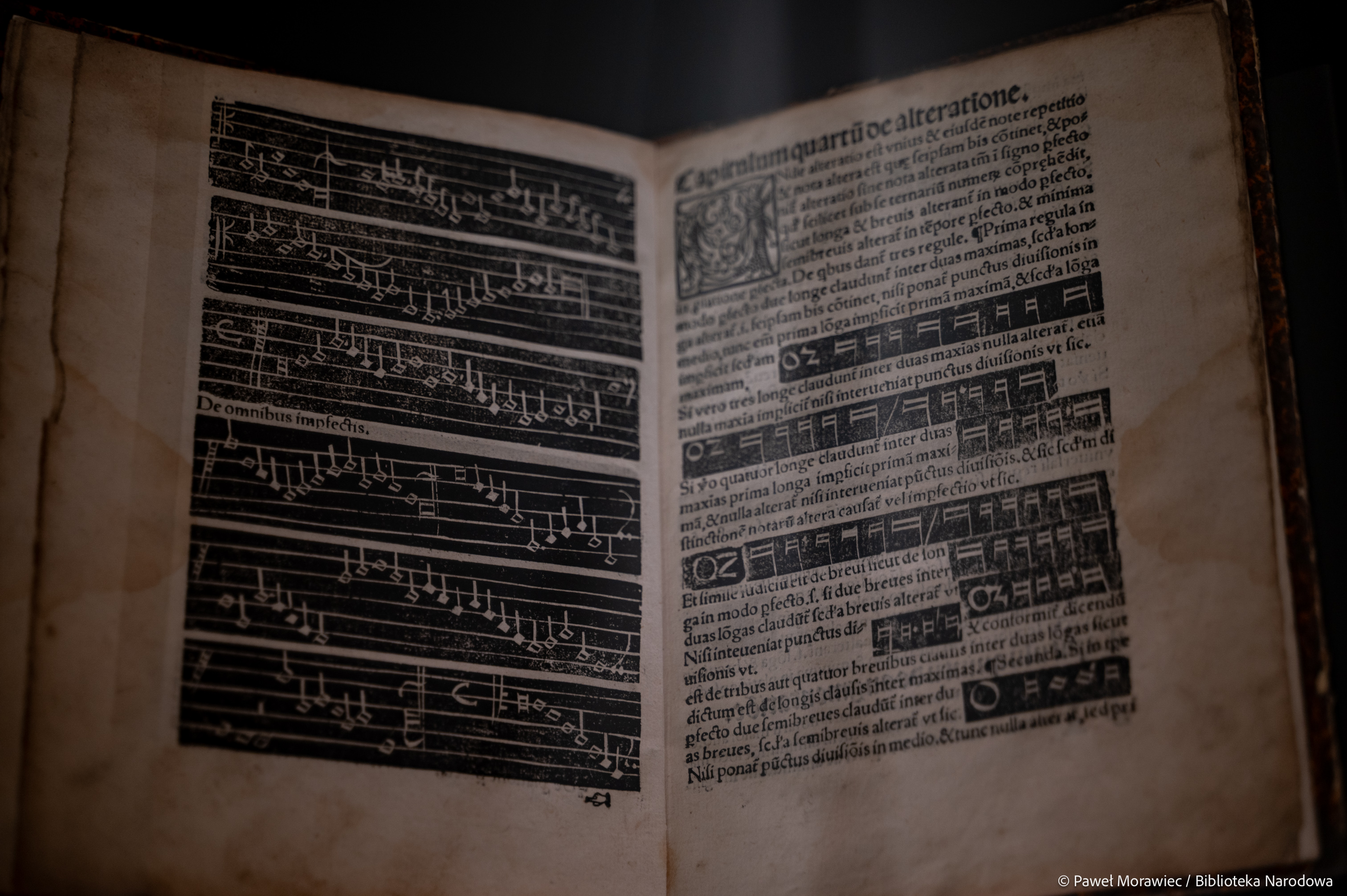
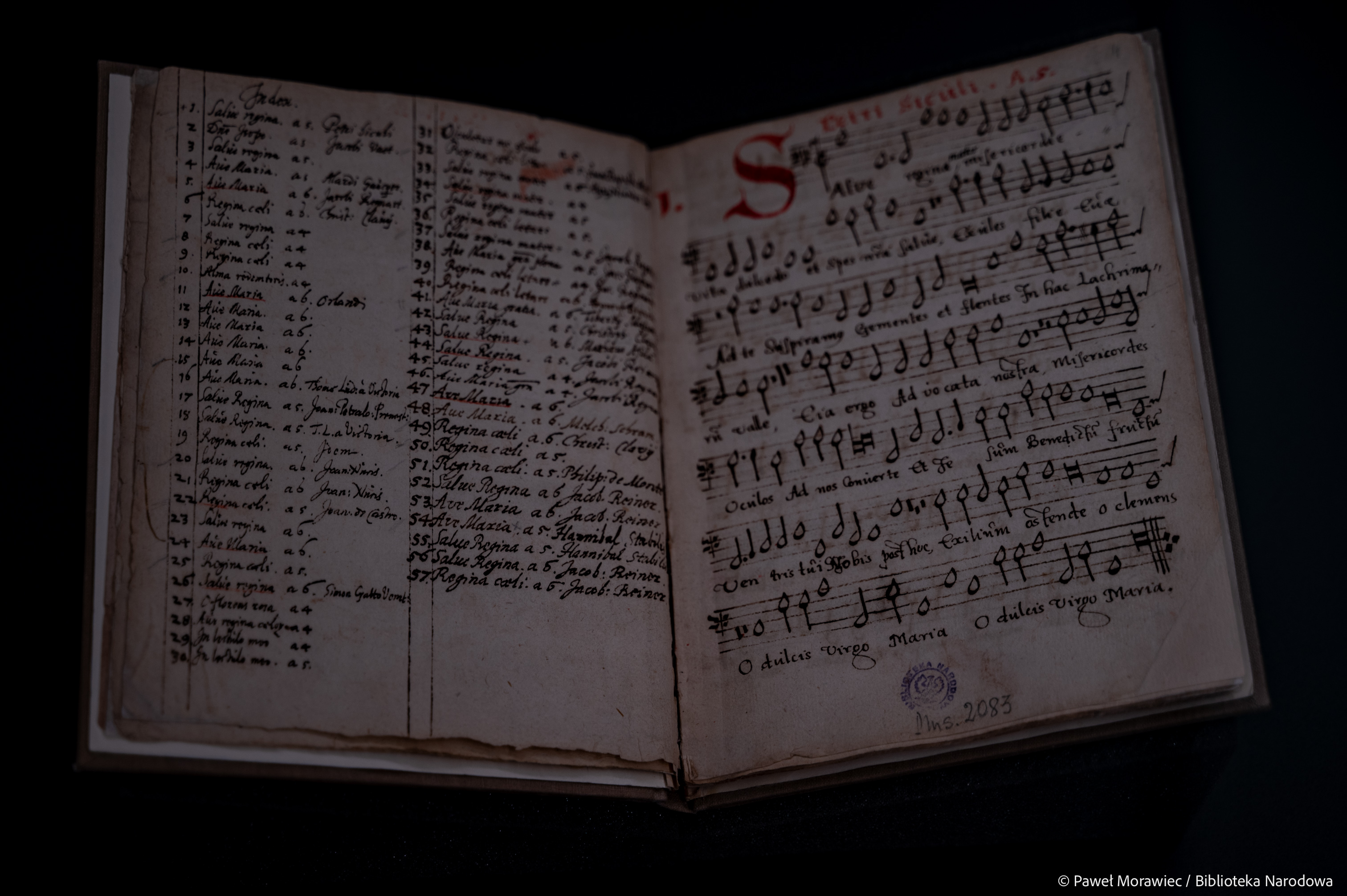
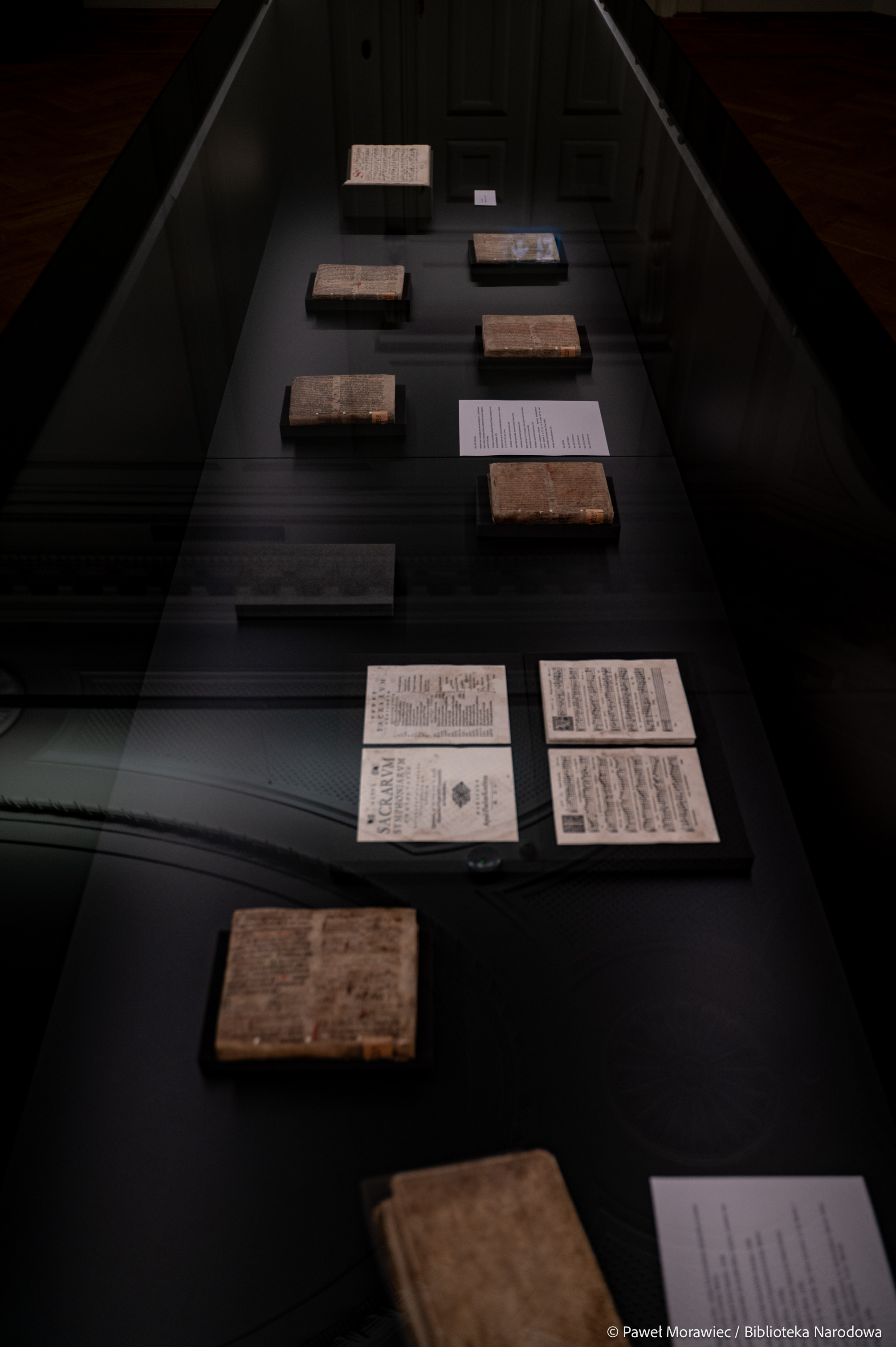
In addition to the Krasiński Codex, visitors were able to view, among other items, a sixteenth-century organ tablature written on a wooden board removed from the binding of a gradual (Mus.2081 Cim.); the so-called Wrocław Fragment (Mus.2082 Cim.); manuscript treatises on mensural notation and printed treatises on plainchant; the Zamoyski Cantional; Mikołaj Gomółka’s Melodiae na Psałterz Polski, composed to texts by Jan Kochanowski; and volumes from the former collection of Duke George Rudolf of the Silesian Piast dynasty, known as the Bibliotheca Rudolphina. All the objects presented during the event are available through the Polona digital library at polona.pl.
In her original curatorial presentation, Sonia Wronkowska focused on the creation of the individual objects and their subsequent histories, which vividly reflect Poland’s geopolitical and cultural past. She introduced visitors to issues of fundamental importance to Polish librarianship, including wartime looting, the deliberate destruction of books, safeguarded collections, the dispersal of historical collections and restitution.
She also emphasised the role of researchers in transmitting knowledge about the cultural heritage preserved in libraries. Drawing on specific examples, she demonstrated how librarians and music historians, through complementary documentation and knowledge-building activities, helped preserve many priceless monuments of musical culture during the war – despite the immense scale of the destruction of library collections in Poland – and contributed to their post-war restitution.
Referring to recent publications on the National Library’s early music collections, she observed that medieval and Renaissance library holdings remain a rewarding field of research, continually open to new readings, hypotheses and interpretations.